If you’re in the mold-making, aerospace, or general precision machining game, you’ve probably asked yourself: why does everyone talk so much about wire diameter when it comes to medium speed wire EDM—especially the economical ones? Let’s cut the jargon, since I’m the guy selling these EDM machines and I see this question every single day from new buyers and seasoned pros alike. My company makes budget-friendly medium speed wire EDMs that punch way above their weight, and I swear by testing every variable under our sun to make our machines work for small shops and big outfits alike. Today, we’re zeroing in on wire diameter: how it actually changes your cutting performance, and why picking the right one doesn’t have to be a headache when you’ve got the right machine backing you up. Economical Medium Speed Wire EDM
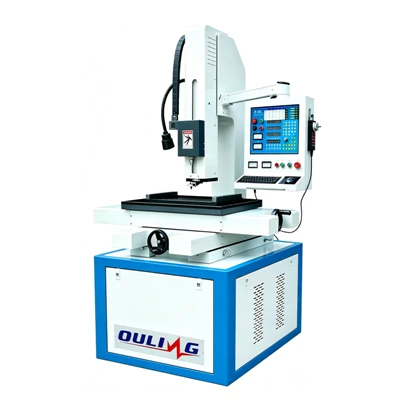
First off, let’s get super basic: medium speed wire EDM runs the wire at a steady clip—usually somewhere between 2 to 12 meters per second—half as fast as the high-speed, brass-wire-only machines, but way more consistent than the slow, dirty ones. The “economical” part of our machines means we built them to work with standard, off-the-shelf wire (no fancy, custom-coated stuff that costs an arm and a leg) so small shops don’t have to drop $500 on a single spool to get good cuts. And wire diameter is make-or-break here, way more than most new buyers realize at first. Let’s break this down like we’re troubleshooting a cut that went sideways last week—no textbook fluff.
Small-diameter wire, think 0.10 mm to 0.18 mm, is the go-to when you’re cutting tiny, intricate features. If you’re making a medical mold with 0.15 mm radius internal corners, or a tiny gear for a drone that needs 0.12 mm wide teeth, this is your bread and butter. Here’s the thing: a thinner wire can follow tight curves way better than a thick one, right? Because it’s more flexible, less prone to bending as it zips through the kerf (the tiny gap the wire cuts in the workpiece). But wait—what’s the catch with thin wire? It’s fragile. When our machines run this thin wire at medium speed, the tension we set matters. Too low, and the wire vibrates like a guitar string before a concert—you get a rough, wavy cut, and maybe even break the wire mid-job. Too high, and the thin wire snaps under tension, especially if you’re cutting thick steel (like 50 mm tool steel for die sets) where the sparking is more intense.
I had a client last month, a small shop that mostly makes custom watch parts, who came to me because their cheap entry-level EDM kept breaking 0.12 mm wire every time they tried to cut a 20 mm deep slot. They thought the wire was bad, so they tried three different brands, same result. Turned out their old machine couldn’t adjust wire tension and speed on the fly for thin wire on deep cuts. Our economical medium speed EDMs have a tiny tension adjustment knob—we calibrated it for thin wire so you don’t have to guess—and the medium speed means less stress on the wire than high-speed machines that zip thin wire so fast it frays before it even exits the workpiece. We showed them, and their break rate dropped from 1 in every 5 cuts to zero. That’s the difference a machine built for economical performance makes, not just the wire itself.
Now let’s talk medium diameter: 0.20 mm to 0.25 mm. This is the sweet spot for most of our customers, the ones doing general work: mold bases, die-cutting blades, aerospace brackets, parts that need both a clean surface finish and enough strength to not break during a 30-minute cut. Why? Thicker wire is way more durable. It handles deeper cuts, faster feed rates, and thicker workpieces without snapping as much. Let’s get real on feed rates here—this is where a lot of people get tripped up. Feed rate is how fast the wire moves through the workpiece, right? For a 0.20 mm wire, you can push that feed rate up to like 0.5 mm per minute (depending on material), but with 0.15 mm wire, you’re lucky to get 0.2 mm per minute without breaking. That means a 100 mm cut that takes 3 hours with thin wire only takes 1.5 hours with medium wire—huge for throughput, especially when you’re juggling 5 jobs a day.
But the tradeoff? Surface finish. Thicker wire leaves a wider kerf, so each spark is a little bigger, right? That means the surface of the workpiece has tiny little craters from the spark, so it’s rougher. If you need a Ra (roughness average) of less than 0.8 microns for a mold that will form clear plastic, medium wire might leave you needing a secondary polishing step. Wait, but hold on—our machines fix that, too. We built our economical medium speed EDMs with a digital pulse generator that fine-tunes spark energy for wire diameter. So if you’re running 0.22 mm wire, the pulse is calibrated to be a little shorter and more precise than if you were running 0.25 mm, so you get a Ra of 0.6 microns without switching to thin wire. That’s one of the biggest perks our customers rave about—we didn’t just sell a machine; we built it to optimize for different wire sizes without extra work.
Now the big boy: thick diameter wire, 0.26 mm up to 0.30 mm. You only go here when you’re cutting really thick stuff—like 100 mm steel blocks for heavy-duty die sets, or aluminum plates for automotive engine components. The upside is obvious: super strong wire, no breaks even at maximum feed rates for deep cuts. I’ve had a customer cut a 150 mm deep slot in hard tool steel with 0.28 mm wire on our machine, and it took just over 2 hours—something he couldn’t do on his old high-speed machine, which kept throwing the wire and taking 4 hours total. But the downside here is twofold: first, the kerf is wider—so if you’re working to tight tolerances (like ±0.005 mm for a precision gear), that extra 0.02 mm of kerf can throw your dimensions off if you don’t calibrate the machine correctly. Second, surface finish is way worse. Thicker wire means bigger sparks, so Ra is usually around 1.5 microns or higher—you’re definitely going to need polishing here, which adds time and cost.
Wait, let’s not forget the elephant in the room when it comes to economical EDM: wire cost, and reusability. A lot of people think medium speed wire EDM lets you reuse wire, right? That’s the whole point of medium speed—you don’t waste a whole spool of wire on one part like high-speed machines. But how does diameter tie into that? Thin wire, because it’s smaller, wears out faster when you reuse it. Each pass of the wire creates wear, so a 0.15 mm wire might only be good for 2 or 3 cuts before it’s too worn to get a tight radius. A 0.22 mm wire, though, is sturdier—we’ve had customers reuse the same spool of medium wire for 10 or 12 cuts on the same type of workpiece, which cuts down on wire costs by like 30%. That’s a huge win for small shops working on tight budgets, which is exactly who our economical EDMs are for.
I want to call out a common myth that I hear all the time: “Thicker wire always gives better productivity.” No way, that’s not true. If you’re cutting a part with tiny internal corners, using a 0.30 mm wire is just going to waste material, leave you with parts that need secondary work, and take longer than if you used thin wire. It’s like trying to write a small signature with a thick marker—you can’t get the detail. And if you’re cutting a thin workpiece, say 10 mm, with a 0.15 mm wire, you’re wasting the wire’s strength for no reason, and you’ll probably get a better finish than with a thick one anyway.
Another thing I’ve tested over and over: how wire diameter interacts with flushing, which is the flow of dielectric fluid that carries away the eroded metal particles from the cut. For thin wire (0.15 mm), you need a very precise, low-flow flush—too much flow will vibrate the thin wire, causing breaks, too little and the particles get stuck, leading to short circuits. Our medium speed EDMs have adjustable flushing nozzles, and we pre-set them for each wire diameter so new buyers don’t have to fiddle with settings. For medium wire, flushing is a little higher, because the kerf is wider, so particles can get out easier, and for thick wire, max flush works best because you’re cutting thicker material with more particles to move.
Let’s talk real-world numbers, because that’s what matters, not theory. Last quarter, we had a customer who makes die-cutting blades for packaging. They were using a competitor’s entry-level medium speed EDM, and they were frustrated: 0.18 mm wire left them breaking every 2 cuts on 1 mm thick mild steel, 0.22 mm wire gave them a Ra of 1.2 microns, which required polishing, and the 0.25 mm wire couldn’t cut their 0.1 mm internal corners at all. They switched to our machine, and we adjusted the settings per wire size: 0.18 mm wire for small corners with 0 breaks, 0.22 mm for straight blade bodies with a Ra of 0.7 microns (no polishing needed), 0.25 mm for thick end pieces with no issues. Their overall productivity went up 40%, wire costs dropped 25%, and their rejection rate went from 8% to 1%. That’s not sales fluff—that’s actual results from our customers, because we built our economical EDMs to adapt to different wire diameters, not force you to use one size for everything.
If you’re shopping for a medium speed wire EDM, the worst thing you can do is pick a machine that doesn’t let you adjust wire tension, flushing, or pulse settings per diameter. A lot of cheap EDMs on the market only work with one wire size, or have generic settings that don’t optimize performance. Our line of economical medium speed wire EDMs is designed exactly for small to mid-sized shops that need flexibility—whether you’re running thin wire for intricate medical parts, medium for general molds and dies, or thick for heavy industrial work.
At the end of the day, wire diameter isn’t just a “pick whatever you like” decision—it’s a performance choice that impacts cutting speed, break rate, surface finish, reusability, and overall part quality. And when you have the right machine backing you up, you don’t have to compromise between affordability and performance. If you’re tired of EDM machines that force you to overspend on wire or settle for lower quality cuts, let’s chat. We can walk through your specific jobs, show you how our EDM adapts to your wire diameter needs, and help you find the setup that cuts your costs and boosts your productivity. No sales pitch, no hidden fees, just real solutions for real machining problems.
Upgraded High Speed Wire EDM Reference
Kunieda, M., Lauwers, B., Rajurkar, K. P., & Schumacher, B. M. (2005). State of the art and future of electrical discharge machining. CIRP Annals, 54(2), 583-607.
McGeough, J. A. (2002). Advanced Methods of Machining. Chapman and Hall.
Rajurkar, K. P., Levy, G., Malshe, A., Bejerano, G., & Kao, J. (1999). Micromachining of die/mold materials by EDM. Journal of Manufacturing Science and Engineering, 121(4), 625-632.
Taizhou Ouling CNC Equipment Co., Ltd.
As one of the most professional economical medium speed wire EDM manufacturers and suppliers in China, we’re featured by quality products and good price. Please rest assured to buy advanced economical medium speed wire EDM made in China here from our factory. Welcome to contact us for quotation.
Address: No. 9 jingang Road, Yangzhou City Jiangsu Province, China
E-mail: 574751243@qq.com
WebSite: https://www.oulingedm.com/
