If you’ve ever spent time troubleshooting disc brake systems, you’ve likely encountered that one moment of uncertainty when you reach for a torque wrench to tighten caliper bolts. As a disc brake caliper supplier with over 12 years in the game, I’ve seen more mistakes with torque specs than I can count—from over-tightened bolts snapping mid-brake job to under-tightened calipers that rattle so loud they make customers think something’s wrong with their wheel bearings. The short answer? There’s no one-size-fits-all torque spec for caliper bolts, but there is a right way to figure out what works for your specific parts, and cutting corners here isn’t just bad practice—it’s dangerous. Disc Brake Caliper
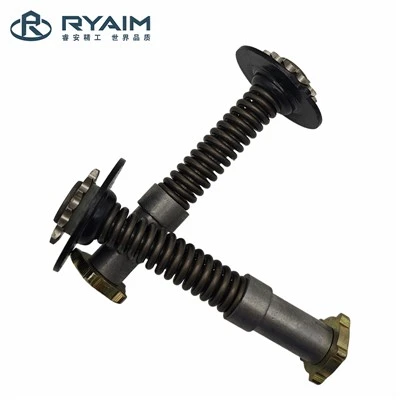
Let me start by breaking down why torque matters, because it’s not just about twisting a bolt until it feels “tight.” A caliper’s job is to squeeze brake pads against the rotor with consistent, even force, and the bolts that hold it to the steering knuckle (or spindle, depending on your vehicle) are what keep that squeeze aligned. If bolts are too loose, the caliper can shift sideways when you hit the brakes, causing uneven pad wear, warped rotors, or even a caliper that detaches during hard stopping. Too tight, and you stretch the bolt beyond its yield strength—most caliper bolts are made from grade 8 or equivalent steel, designed to clamp down a specific amount, not be cranked until you can’t turn the wrench. Stretched bolts don’t just snap; when they do, the caliper can’t hold its position, leading to catastrophic brake failure at the worst possible time.
Now, I know what a lot of DIYers and even some smaller repair shops do: they Google “brake caliper bolt torque specs” and grab the first number that pops up. That’s a mistake, and I see it all the time when customers send back calipers for warranty claims because their bolts stripped or snapped. The torque spec depends on three big factors: the bolt’s size, its material grade, and whether it’s a banjo bolt (for hydraulic brake lines) or a caliper mounting bolt. Wait—yes, there’s a difference between mounting bolts (the ones that hold the caliper to the knuckle) and the banjo bolts that connect the brake hose to the caliper, which have totally separate specs. I can’t tell you how many times a tech has tightened a banjo bolt to mounting bolt torque and cracked the caliper’s hose fitting.
Let’s get specific with common specs, because that’s what most people actually want to know. For standard caliper mounting bolts—usually 10mm, 12mm, or 14mm in diameter, grade 8 steel—the sweet spot is generally between 25 ft-lbs and 40 ft-lbs. A 10mm bolt typically lands around 25 ft-lbs, 12mm is 35 ft-lbs, and 14mm is around 40 ft-lbs, but even that can shift. If you’re working on a performance vehicle or a heavy-duty truck, those numbers go up—performance calipers often use larger grade 8.8 or higher bolts, so specs can hit 50 ft-lbs or more. For banjo bolts, though, it’s way lower: most are between 15 ft-lbs and 20 ft-lbs, because the hose fitting is made of soft aluminum or brass, and over-tightening will strip the threads or split the sealing washer, leading to brake fluid leaks.
Here’s where I have to call out a common myth: “If I use thread locker, I can use a higher torque spec.” No, you can’t. Thread locker changes the friction between the bolt and the threads, so even if you use the same torque wrench setting, you’re clamping the bolt more or less than you would with dry threads. If you do use thread locker (and I recommend it for high-vibration applications to keep bolts from coming loose), you need to adjust your torque spec by about 10-15% lower. For example, a dry 12mm bolt at 35 ft-lbs becomes 30 ft-lbs with red thread locker. I’ve had customers skip that adjustment, crank the bolt too tight, and have threads strip out of the caliper’s aluminum body—aluminum is soft, so it’s way more prone to stripping than steel, which is why some calipers come with steel thread inserts for mounting bolts now.
Another mistake I see is using an impact wrench to tighten caliper bolts. Impact wrenches deliver sudden, high force instead of steady torque, and they almost always over-tighten bolts, even if you set the wrench to a “low” setting. Last year, we had a customer send us 20 used calipers back because their techs used impact guns, and every single one had stretched or snapped mounting bolts. The warranty claim didn’t get approved, of course, because that’s improper installation, not a defect in our calipers. My advice: use a hand torque wrench, not an impact, and follow the spec to the pound-foot.
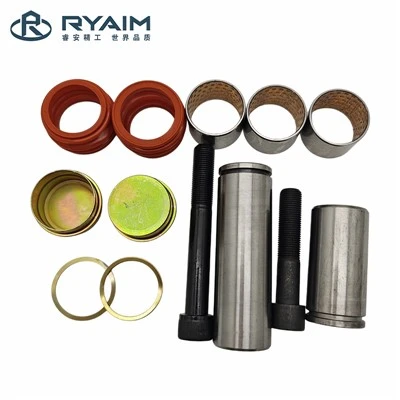
Wait a second—what about the caliper hardware kit? A lot of people forget that the small parts matter too. The slide pins, which let the caliper move evenly to engage both sides of the rotor, have their own torque specs too, usually around 15 ft-lbs to 20 ft-lbs. If you over-tighten slide pins, they can’t slide smoothly, leading to uneven pad wear and dragging brakes, which wastes gas and shortens pad life. Under-tighten them, and they can rattle, causing noise that makes drivers think they need expensive repairs. At our company, every caliper we ship comes with a printed spec sheet that lists both mounting bolt torque and slide pin torque, plus a note about thread locker, so our customers don’t have to guess. But surprisingly, only about 30% of our customers actually read that sheet—most just throw it away and look up specs online, which is why we started adding a small sticker on the caliper box with the key torque numbers.
Let’s talk about real-world examples to make this concrete. Last month, a regular customer who runs a small independent brake shop called me in a panic. They’d installed a set of our front disc brake calipers on a 2018 Toyota Camry, and when the tech went to tighten the mounting bolts, the bolt snapped clean in half. The tech had looked up a generic spec for Toyota calipers online, which said 45 ft-lbs, but our spec for the 2018 Camry’s 12mm mounting bolts is 35 ft-lbs. That 10 ft-lbs difference was enough to stretch the grade 8 bolt past its breaking point. I walked him through the right torque procedure, apologized for the hassle, and sent him a new set of bolts for free. He later told me that since then, he’s started using our spec sheets every time, and he hasn’t had a bolt snap since.
Another example: a performance enthusiast who bought our big brake kit for his 2020 Ford Mustang. He wanted to go with higher torque to “make sure the caliper doesn’t move” and tightened the mounting bolts to 50 ft-lbs. A week later, he emailed us saying his brake pedal felt spongy, and when he checked, the banjo bolt had leaked brake fluid. Our spec for that Mustang’s banjo bolt is 18 ft-lbs, so he’d tightened that way too, cracking the aluminum caliper’s hose fitting. We sent him a new caliper and a sheet that explained the difference between mounting and banjo bolts, and he’s since become a repeat customer for his friend’s car too.
So, how do you find the correct torque spec for your exact application? First, always check the manufacturer’s documentation for the vehicle or the caliper itself. If you’re buying a caliper from a supplier like us, the spec sheet that comes with the part is your best bet—we spend hours researching and testing each caliper to get the exact torque, not just generic numbers. If you’re working on an older vehicle that doesn’t have a manual, cross-reference with multiple trusted sources—don’t rely on a single forum post. Avoid “universal” torque charts for brake parts, because they’re often outdated or wrong. Also, if you’re replacing bolts, always use the exact same size and grade as the original or the one that came with your caliper—don’t swap in a higher grade bolt just because you think it’s stronger, because it will have a different torque spec.
Let me also add a pro tip from our team of brake engineers, who have been testing calipers in our lab for years: when tightening caliper mounting bolts, do it in a crisscross pattern, like tightening wheel lug nuts. Tighten one bolt a little, then the opposite one, then the next, so the caliper clamps evenly to the knuckle. If you tighten one bolt all the way first, you’ll warp the caliper’s mounting surface, leading to uneven pad contact and brake pulsation when you stop. That’s another common complaint we get from customers who didn’t follow the pattern—brake pulsation that turns out not to be warped rotors, but a poorly mounted caliper from bad torque technique.
I know this all sounds like a lot of small, picky details, but brake work isn’t something to cut corners on. Torque specs aren’t arbitrary numbers they put in a manual to make techs’ lives hard—they’re engineered values that keep your brakes working safely. As a disc brake caliper supplier, we don’t just sell parts; we sell the right information to go with them, because we’ve seen what happens when people ignore the specs. A brake failure on the highway isn’t just an inconvenience—it can be deadly, and more often than not, it’s caused by improper torque on caliper bolts, not a defective part.
If you’re a repair shop owner looking for consistent, correctly spec’d calipers, or a fleet manager needing bulk parts and support, don’t guess on your torque specs. We have a team ready to help you find the exact calipers and torque info for your vehicles, plus we offer installation guides and technical support to make sure the job is done right. Stop relying on generic online specs that get people in trouble—reach out to our team today to talk about your needs, and get the right parts and guidance for your brake projects.
Chinese Domestic Type REFERENCES
- Automotive Brake Engineering Association. (2021). Caliper Mounting Fastener Torque Specifications and Best Practices.
- Society of Automotive Engineers (SAE). (2019). Standard J2942: Brake Caliper Fastener Torque and Installation Procedures.
- Federal Motor Vehicle Safety Standards (FMVSS). (2020). Title 49 CFR Part 571.135: Brake Systems Performance Requirements.
- Disc Brake Caliper Manufacturers Association. (2022). Grade and Torque Guidelines for Disc Brake Mounting Bolts.
Zhejiang Ryaim Auto Parts
As one of the most professional disc brake caliper manufacturers and suppliers in China, we’re featured by quality products and good service. Please feel free to wholesale custom made disc brake caliper from our factory. Contact us for more details.
Address: No. 78, Yexiao Road, Yaojiang Town, Zhuji City, Zhejiang Province
E-mail: bd@zjryaim.com
WebSite: https://www.ryaimchina.com/
