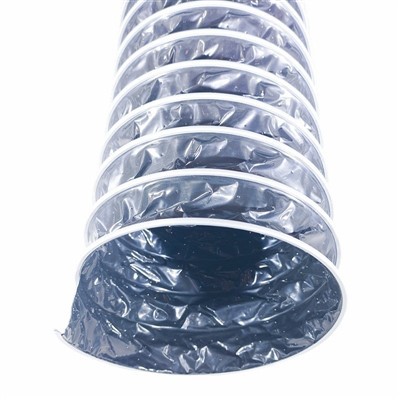
As someone who’s been supplying PVC air ducts to commercial and industrial clients for over a decade, I get asked this question at least a dozen times a week: “What’s the fire rating of your PVC air ducts?” It’s a fair question too—fire safety isn’t just a box to check for building codes; it’s what keeps spaces, equipment, and most importantly, people safe. A lot of misinformation floats around about PVC materials and their performance in fires, so I want to break this down clearly, based on industry standards, real-world testing, and what we actually see when our ducts are installed in projects. PVC Air Duct
First, let’s start with the basics: what a fire rating for a duct even means. It’s not just a single number—fire ratings tell you two key things: how long a material can resist flame spread when exposed to an open fire, and whether it contributes to the spread of fire and smoke. For HVAC ducts, this is regulated by specific standards, because ducts act like pathways for air, and if a duct fails in a fire, it can turn a small blaze into a building-wide emergency.
When we talk about PVC as a material, it’s important to distinguish between the different types of PVC used for air ducts. Most of our inventory uses rigid polyvinyl chloride (PVC), a thermoplastic polymer that’s inherently flame-resistant—though that doesn’t mean it’s fireproof. A common misconception is that all plastics burn easily, but PVC is different: it has a high chlorine content (around 57% by weight), which acts as a flame retardant. When exposed to high heat, PVC doesn’t melt and drip like some other plastics; it chars, which forms a protective layer that slows down further burning.
Now, the standardized fire ratings for HVAC ducts come from two main testing methods: ASTM E84 (Standard Test Method for Surface Burning Characteristics of Building Materials) and NFPA 271 (Standard Method of Test for Heat and Visible Smoke Release Rates for Materials and Products). These are the gold standards in North America, and most other regions have equivalent tests aligned with these specs.
For PVC air ducts, the results from these tests are consistent: our standard PVC ducts have an ASTM E84 flame spread index (FSI) of 25 or less, and a smoke developed index (SDI) of 450 or less. Let me put that in context to make it tangible: the building code classifies materials as “non-combustible” if they have an FSI of 0, but that’s rare for duct materials. Materials with an FSI under 25 are considered to have minimal flame spread—way below the 75 threshold for “limited combustibility” under most codes. For example, wood (a common building material) has an FSI of around 100, so our PVC ducts are four times more resistant to flame spread than wood. The smoke developed index is equally important here: smoke is a leading cause of fire-related deaths, and our PVC ducts’ SDI of 450 is well within the acceptable range for most commercial HVAC systems.
But wait—there’s a catch here: not all PVC air ducts are the same. We also supply reinforced PVC ducts for harsher applications, like industrial ventilation or exhaust systems that handle higher temperatures. Those reinforced models have different fire ratings, specifically tailored for use in environments where standard PVC might be challenged. For example, our heavy-duty reinforced PVC ducts meet UL 94 V-0, a vertical burn test standard that requires the material to self-extinguish within 10 seconds after a flame is removed, and not drip burning particles that could start secondary fires. That’s a critical difference for industries like manufacturing, where exhaust systems are often near hot machinery or other ignition sources.
I’ve seen too many contractors make the mistake of assuming all PVC ducts have the same fire rating, which leads to code violations or, worse, safety risks. Last year, a small manufacturing facility in Ohio tried to cut costs by using a cheap, untested PVC duct for their spray booth exhaust. When the local inspector came through, they flagged it because the duct’s FSI was over 100, which violated the building code for industrial exhaust systems. The facility had to rip out the cheap ducts and replace them with our UL 94 V-0 rated reinforced PVC ducts, costing them twice as much as they would have upfront if they’d chosen the right product in the first place. That’s why I always tell clients: don’t just look for “PVC” on the label—ask for the test data that backs up the fire rating.
Another question I get is: how does exposure to high heat affect PVC’s fire rating? Standard PVC softens around 140°F, but its flame resistance stays intact up to temperatures well above that, as long as it’s not directly exposed to a sustained fire. That’s why it’s so popular for HVAC systems: it maintains its fire-resistant properties even when carrying conditioned air throughout a building. The exception is if PVC is exposed to temperatures above 180°F for extended periods, it can start to degrade, and while it will still self-extinguish, its flame spread index might shift slightly—so for ducts handling air over 150°F, we recommend our heat-stabilized PVC, which is engineered to resist degradation at higher temperatures while keeping the same fire ratings.
We also don’t cut corners on fire testing for our products. Every batch of PVC ducts leaves our warehouse with a copy of the test reports from independent third-party labs, like Underwriters Laboratories (UL) or Intertek. We don’t self-certify—those third-party tests are non-negotiable for us, because I’d never sell a product to a client that I wouldn’t use in my own warehouse. A few years back, we had a client who asked if we could provide a custom batch of PVC ducts for a hospital project. Hospitals have some of the strictest fire safety codes in the world, requiring ducts to have a 2-hour fire resistance rating. Wait, a 2-hour rating—does PVC even do that? It turns out, with a special fire-resistant coating and additional structural reinforcement, we were able to develop a PVC duct that passed a 2-hour ASTM E119 fire test (the standard for structural fire resistance), which means it can block fire and heat from passing through the duct walls for two hours. That project was a big win, and it proved that PVC isn’t just a basic duct material—it can be engineered to meet even the most stringent fire safety requirements.
I want to be clear: no duct material is completely fireproof. Even the most fire-resistant duct will burn if exposed to a hot enough, sustained fire. But the fire rating of a PVC air duct tells you how it performs in the conditions it’s likely to face in normal use, and how it stands up to the types of fires that are common in commercial and industrial spaces. That’s what matters for code compliance and for keeping people safe.
A common alternative to PVC ducts is metal ducts, like galvanized steel or aluminum. Some people assume metal is more fire-resistant, but here’s the thing: metal doesn’t burn, but it can deform at high temperatures, and the joints and seals in metal ducts are often the weak points when it comes to fire and smoke spread. PVC ducts, on the other hand, have fewer seams (since they’re often extruded as single-length sections) and their flame resistance means they won’t propagate fire as easily as metal ducts, which can allow fire to spread through gaps in joints. Plus, PVC is lighter, easier to install, and cheaper than metal, making it a practical choice when fire ratings are a consideration.
That said, there are specific applications where PVC might not be the best fit, even with its good fire rating. For example, ducts for commercial kitchen exhaust systems, which are exposed to grease and very high temperatures, usually require metal ducts. But for most HVAC ventilation, return air, or general industrial ventilation systems, PVC’s fire rating is more than sufficient.
If you’re a contractor, facility manager, or project engineer reading this, the key takeaway is: verify the fire rating of your PVC air ducts with third-party test data, match the rating to the specific requirements of your project, and don’t skimp on compliance. At the end of the day, a duct that meets the right fire rating isn’t just a code requirement—it’s a layer of protection for everyone who uses the space.
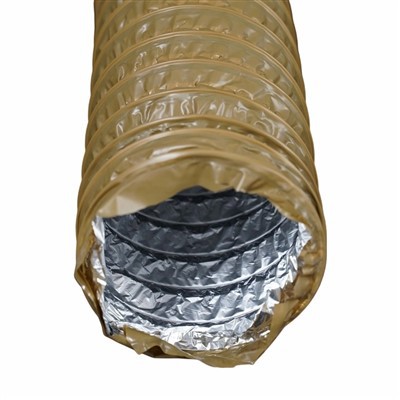
We’ve been supplying PVC air ducts for over a decade, and our products are used in everything from office buildings and schools to manufacturing plants and hospitals. If you’re looking for PVC air ducts with proven fire ratings tailored to your project, feel free to reach out to our team to discuss your needs, review test reports, and find the right solution for your application. Let’s work together to make your project safe, compliant, and cost-effective.
Vacuum Tube References
ASTM E84-21, Standard Test Method for Surface Burning Characteristics of Building Materials. American Society for Testing and Materials, 2021.
NFPA 271-20, Standard Method of Test for Heat and Visible Smoke Release Rates for Materials and Products. National Fire Protection Association, 2020.
UL 94-21, Standard for Safety of Flammability of Plastic Materials for Parts in Devices and Appliances. Underwriters Laboratories, 2021.
NFPA 90A-22, Standard for the Installation of Air-Conditioning and Ventilating Systems. National Fire Protection Association, 2022.
Dongyang Hstube Co., Ltd.
As one of the leading PVC air duct manufacturers and suppliers in China, we warmly welcome you to wholesale cheap PVC air duct for sale here from our factory. If you have any enquiry about free sample, please feel free to email us. Quality products and reasonable price are available.
Address: NO.5 CHENGDONG ECOLOGICAL INDUSTRIAL ZONE, DONGYANG, ZHEJIANG, CHINA.
E-mail: sales@hstube.com
WebSite: https://www.ductword.com/
