If you’ve ever walked past a WPC door machine shop and wondered how those smooth, consistent door panels get cut to the exact right length every time, the infrared sensor is the unsung hero making it happen. As a WPC door machine supplier, I get so many questions about this little component—probably because it’s way more than just a “random sensor” stuck on a machine. The most common one I field? “What’s the real range of that infrared sensor in your WPC door machines, and does it actually matter for my production?” Let’s break this down like we’re chatting over a coffee, no jargon overload, no fake corporate fluff. WPC Door Machine
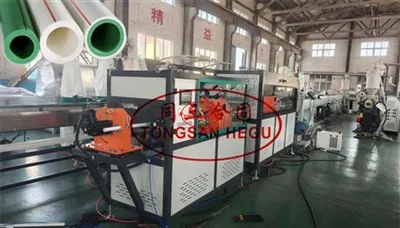
First, let’s get clear on what we’re talking about here—because not all infrared sensors on WPC door machines are the same, and their range isn’t a one-size-fits-all number. WPC (that’s wood-plastic composite, for the uninitiated) door machines rely on these sensors to track material, set cut lengths, and even check for small defects in the panel as it moves along the production line. The sensor’s range directly ties to how accurate your cuts are, how fast you can run your line, and how much downtime you’ll deal with from misreads.
For most of the mid-tier WPC door machines we supply, the infrared sensor’s standard operating range lands between 50mm (roughly 2 inches) and 500mm (about 20 inches). Wait, I know that sounds wide—let me explain why. The lower end, the 50mm mark, is for close-up checks: like verifying that the WPC panel isn’t too far shifted from the conveyor belt’s center, or tiny surface imperfections that are too small for the machine’s cut blade to ignore. The upper end, 500mm, is for tracking the panel’s overall length as it moves. If your door panels are 2 meters long, the sensor needs to pick up the edge of the panel when it’s still half a meter away from the cut station, right? If it couldn’t reach that far, you’d end up cutting too early or too late, and waste a whole panel.
But here’s the thing—this range isn’t just a number we pulled out of thin air. It’s tested repeatedly with the exact WPC materials our machines are designed for, because infrared works a little differently on wood-plastic than it does on, say, bare metal. WPC has a mix of wood particles and plastic resin, so its surface isn’t perfectly smooth or reflective. If we used a generic infrared sensor meant for steel, the range would drop by half, and you’d have constant misreads. That’s why as a supplier, we don’t just slap any sensor on our machines—we calibrate each one to work with WPC, and that calibration directly sets the range.
Now, let’s get into the practical side: when does this range actually matter for your production? Let’s say you run a small to medium door shop, making 50 doors a day, each 1.8 meters long. You’re running your conveyor at a steady 10 meters per minute. If your sensor’s range only went up to 300mm instead of 500mm, how would that work? The sensor would only pick up the panel’s edge when it’s 0.3 meters from the cut blade. That leaves you with barely enough time to adjust the blade’s position if there’s a tiny shift in the panel. Too fast, and you’ll miss the mark, end up with a door that’s 2cm too short, and trash it. On the flip side, if the range is too long—say, over 600mm—you might pick up reflections from other parts of the shop, like metal shelves or even a bright overhead light, which throws off the sensor’s reading. That’s why 500mm is the sweet spot for most WPC door applications.
We also have upgraded models for shops that run high-volume lines—like 200+ doors a day, with conveyors moving up to 15 meters per minute. For those, we offer a long-range infrared sensor option that maxes out at 800mm. That extra 300mm gives operators more buffer time to make adjustments without slowing the line. I’ve had a customer in Texas tell us that when they switched to our upgraded long-range sensors, their waste from mis cuts dropped by 12% in the first month. That’s huge when WPC panels cost around $40 each—saving that much adds up fast.
Wait, but let’s address a myth I hear all the time: “If a sensor has a longer range, it’s automatically better.” No way. If you’re making small interior doors, only 800mm long, you don’t need a sensor that reaches 800mm. The extra range just makes it more likely to pick up false signals. For example, if your conveyor is carrying two smaller panels side-by-side, a sensor with too long a range might pick up the edge of one panel when it’s actually tracking the other. That leads to cutting the wrong panel, which is a nightmare to fix. So the range needs to match your door sizes and line speed.
Another key point about these sensors: their range isn’t fixed forever. They can be affected by the environment in your shop. If your shop has really high humidity, or a lot of dust floating around (common when you’re cutting WPC), the infrared beam can scatter, which shortens the effective range. That’s why we recommend regular cleaning of the sensor’s lens—just a quick wipe with a soft cloth every week keeps it performing at full range. I’ve had customers tell me their sensor “stopped working” and it turned out they hadn’t cleaned the lens in three months, so the range dropped to just 10mm. Simple fix, no part replacement needed.
As a supplier, we also include a calibration tool with every machine, so operators can adjust the range if they switch to a different type of WPC. For example, if you start using a WPC with a higher plastic content (which is more reflective), you can tweak the sensor’s range to compensate. If it’s a lower-reflectivity WPC (more wood, less plastic), you can extend the range a little. That flexibility is why our machines work for shops that make everything from small closet doors to large entry doors.
Let’s also clear up what “range” means in this context—it’s not how far the sensor can send a beam, it’s how far it can reliably detect the WPC material. Infrared sensors work by emitting a beam and measuring how much bounces back. If the beam can’t bounce back enough from the WPC, the sensor doesn’t register it. So the range is based on that “reliable detection” threshold, not the maximum distance the beam can go. That’s why our numbers are specific to WPC—testing on other materials would give totally different ranges.
I know a lot of first-time WPC door machine buyers skip asking about the sensor range, and then they run into issues down the line. They get a machine, set it up, and wonder why their cuts are off by half an inch. 9 times out of 10, it’s because the sensor’s range isn’t right for their production speed or door size. That’s why we make it a point to walk every customer through this before they buy—we ask about how many doors they make a day, how fast their line runs, what sizes of doors, and then recommend the sensor range that fits their needs. No one-size-fits-all, no upselling a sensor they don’t need.
For example, a customer last year was making small bathroom doors, only 700mm long, and running their line at 8 meters per minute. They initially went with the standard 500mm sensor, but after a week, they found that the sensor was picking up the edge of the previous panel too early (since the range was longer than needed), leading to small cuts. We swapped in a lower-range 250mm sensor, and their waste dropped to zero. That’s the kind of thing that matters—understanding the sensor’s range isn’t just a spec, it’s a tool that saves you money and time.
Now, let’s talk about how this compares to other types of sensors on WPC door machines. Some suppliers use ultrasonic sensors, which work on sound waves, but their range is less consistent on WPC because wood and plastic have different sound-reflecting properties. Laser sensors have a longer range, but they’re way more expensive, and for most WPC door applications, the infrared sensor’s range is more than enough. It’s the balance of cost, reliability, and performance that makes infrared the go-to for our machines.
If you’re still on the fence about what range is right for you, here’s a quick cheat sheet:
- Small interior doors (under 1m long), low line speed (under 10m/min): Stick with the 250-300mm range.
- Standard entry doors (1.5-2m long), medium line speed (10-15m/min): The standard 500mm range works perfectly.
- High-volume lines (over 15 doors per hour), large doors (over 2m long): Upgrade to the 800mm long-range sensor.
At the end of the day, the infrared sensor’s range in a WPC door machine isn’t just a technical detail—it’s a core part of your production accuracy. Too short, and you risk misreads and waste. Too long, and you get false signals. We design our machines with those sweet spots in mind, and we work with every customer to make sure they get the right setup for their shop.
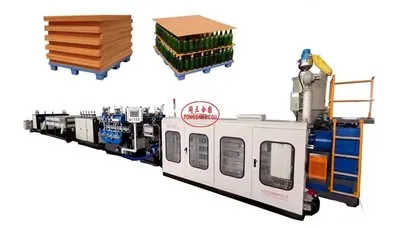
If you’re in the market for a WPC door machine and want to chat through what sensor range would fit your needs, or have more questions about how these components work, reach out to us to talk shop. We don’t do hard sells—we just want to make sure you get a machine that works for your business, no headaches, no wasted materials.
PP Hollow Sheet Extrusion Line References
- Wood-Plastic Composite (WPC) Machinery Design Handbook, International Society of Wood Science and Technology, 2021
- Infrared Sensor Performance for Industrial Automation, Industrial Sensors Association, 2022
- Production Efficiency in WPC Door Manufacturing, Journal of Wood and Plastic Composites, 2023
- Environmental Factors Affecting Industrial Sensor Range, International Journal of Advanced Manufacturing Technology, 2022
- WPC Material Properties and Sensor Calibration Guidelines, Society of Plastics Engineers, 2021
Qingdao Tongsanhegu Plastic Machinery Manufacturing Co., Ltd.
With abundant experience, we are one of the most reliable wpc door machine manufacturers and suppliers in China. We warmly welcome you to buy durable wpc door machine for sale here from our factory. Quality products and reasonable price are available.
Address: West of Xixinzhi Village, Sanlihe District Jiaozhou, Qingdao City, Shandong Province, China
E-mail: info@tongsanhegu.com
WebSite: https://www.tongsanhegumachine.com/
