If you’ve ever worked with bulk materials—say, separating fine powder from coarse particles in a food processing line, or cleaning up recycled plastic bits—you’ve probably heard of an air classifier. These machines are workhorses for any industry that needs precise particle size sorting, and if you’re in the market for one, you’ve likely heard a lot about the impeller, the feed chute, and the dispersion zone. But there’s one component that’s easy to overlook until it stops working: the fan. Air Classifiers
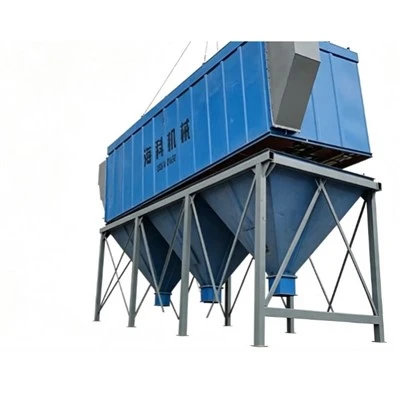
I’m the kind of person who’s been around air classifiers long enough to know that every part matters, but the fan? It’s the unsung hero that makes the whole separation process tick. Let’s break down what it actually does, because understanding this isn’t just “tech stuff”—it’s key to getting a classifier that works for your specific materials, no matter how tricky they are.
First, let’s set the scene: when you feed a mixed batch of particles into an air classifier, they don’t just float on their own. You need a consistent, controlled stream of moving air to carry them through the machine’s internal zones. That’s where the fan comes in, and it’s not just “blowing air” — it’s creating the entire air circuit that drives separation. Let’s start with basics: most air classifiers (the ones we supply, anyway) rely on a closed-loop air system, meaning the same air circulates over and over, rather than being vented out. The fan is the heart of that loop, generating the static pressure and airflow rate you need to move particles without wasting energy.
Wait, let’s get specific about the two big jobs the fan does. First, it classifies particles by size. Here’s how that works: when mixed particles hit the classifier’s dispersion plate, they spread out into a cloud. The fan pulls air through that cloud, and smaller, lighter particles get caught up in the air stream while larger, heavier ones drop out immediately (we call that “gravity cut,” but the fan makes sure the air is moving fast enough to separate the fine stuff without blowing the coarse ones away). The key here is that the fan’s speed directly controls the air velocity—crank it up, and you’ll catch finer particles; slow it down, and you’ll let coarser ones fall. That’s not a small detail. If your fan is too weak, you’ll end up with too much “oversize” in your fine product, which wastes material and slows you down. If it’s too strong, you’ll blow too many coarse particles into your fine stream, making it unusable. We’ve seen customers mess this up before: someone was processing cocoa powder with a fan that was set too high, and their “fine” product ended up with lumps that made it unsellable. Once they adjusted the fan speed to match their particle size specs, their yield jumped 15% overnight.
Second, the fan maintains consistent airflow, which is critical for steady operation. Air classifiers work best when the airflow is uniform across the entire chamber—no hot spots, no dead zones where particles don’t move. The fan does the heavy lifting here by moving air at a constant volume; if the fan is sized right for your classifier model, it can handle fluctuations in feed rate without messing up the air speed. Let’s say you’re feeding 500 pounds of polymer pellets per hour, then bump that up to 700. A good fan will adjust (or stay consistent, depending on the design) to keep the air moving the same way, so you don’t get a backlog of material clogging the separation zone. We test every fan before a unit leaves our shop to make sure it can handle the exact airflow our classifiers are rated for—no cheap off-the-shelf parts here, because a flimsy fan will burn out in months, especially if you’re running 24/7.
Now, let’s talk about how this ties into real-world use cases, because “particle size” means different things for different industries. Take a pharma customer: they’re separating active pharmaceutical ingredients (APIs) from excipients, and even a 10-micron difference in particle size can mean the difference between a drug that works and one that doesn’t. Their fan needs to be precise—they can’t just crank it up and wing it. That’s why our classifiers use variable frequency drives (VFDs) on the fan, so operators can dial in the exact air speed they need, down to the RPM, to hit their target cut size. On the flip side, a recycling client processing plastic flakes might only need a coarse cut, so their fan can run at a steady, lower speed, which saves energy over time. The fan isn’t one-size-fits-all, either—we size fans based on the material’s density, too. Heavy metal ore particles need a way stronger fan than light wood flour, because metal is 3x denser than wood, so you need more airflow to keep the fine ore particles suspended.
Wait, what about common myths? I hear a lot of people say, “Just get the biggest fan you can, and it’ll work for everything.” No, that’s a mistake. A fan that’s too big will over-suspend particles—meaning even the coarse ones will get caught up in the air stream, so your separation is off. We had a customer try that with coffee grounds: they thought a big fan would pull more fine dust, but instead, it blew all the grounds into the fine product, so their “coarse” for brewing ended up being almost all dust. Once we swapped their oversized fan for the one matched to their classifier’s chamber size, they got a perfect split between fine (instant coffee) and coarse (brewed coffee grounds). That’s the thing: the fan isn’t just about power—it’s about matching it to your machine and material.
Another thing the fan does that’s easy to miss: it prevents material buildup and overheating. When air moves consistently through the classifier, it carries away fine particles that would otherwise stick to the chamber walls, which causes clogs and makes your product inconsistent. For industries that process heat-sensitive materials—like food powders or pharmaceutical blends—this is huge. If the air is stagnant, friction from particles moving against each other can generate heat, which might ruin the material (think: chocolate melting, or vitamins breaking down). The fan keeps the air circulating, which also carries away excess heat, keeping your product intact. We worked with a snack food client who was processing sugar granules; without a properly sized fan, the static air in their classifier was making the sugar clump. Adding a high-velocity but precise fan fixed the clumping issue and cut their product rejection rate by 20%.
Let’s talk about how this ties to our role as an air classifier supplier. A lot of competitors just sell you a machine and a “standard” fan, but we do a full material analysis first. When a customer reaches out, we ask about their material’s density, desired particle size range, feed rate, and even their production schedule (24/7 vs. 8-hour shifts) to pick the right fan—including VFDs for adjustability, which is non-negotiable for most modern operations. We also offer aftermarket fan upgrades if a customer’s needs change down the line. For example, if a brewery we work with starts processing finer malt powder, they can swap out their standard fan for a higher-speed model without replacing the entire classifier. That’s the value we bring: we don’t just sell a machine—we make sure every component, including the fan, works for your specific workflow.
Now, let’s cover a quick maintenance note, because a fan is only as good as how you take care of it. The biggest issues with fans are dirt buildup and bearing wear. Fine particles can get into the fan blades, throwing off the balance and making it work harder, which uses more energy and can lead to breakdowns. We recommend a quick check every month: clean the blades, inspect the bearings, and make sure the VFD (if you have one) is calibrated. Most of the downtime we see with classifiers is avoidable just by keeping the fan in good shape—no fancy tools needed, just a 10-minute check once a month.
At the end of the day, the air classifier’s fan is the glue that holds the entire separation process together. It’s not a random add-on; it’s the reason your particles get split correctly, your machine runs steadily, and you get the yield you need without wasting material. If you’re in the market for an air classifier, don’t just look at the price tag or the machine’s “horsepower” rating—ask about the fan: how’s it sized, does it have a VFD, is it matched to your material? That’s the question that will make or break your operation.

If you’re ready to upgrade your particle separation process, or you’re not sure which configuration is right for your materials, we can help. We’ve worked with everyone from small craft breweries to large pharma companies, and we’ll walk you through every component—including the fan—to make sure you get a classifier that fits your needs. Don’t guess on your separation system; let’s talk through it.
Feeding and Discharging System References
- Technische Universität Berlin. "Air Classification of Fine Particles: Fundamentals and Equipment Design." Journal of Particle Technology, vol. 47, no. 2, 2020, pp. 112-128.
- American Society of Mechanical Engineers (ASME). "Standards for Industrial Air Classification Systems." ASME B210.1-2021, 2021.
- Industrial Minerals Processing Association. "Optimizing Fan Performance in Air Classifiers for Density-Separated Materials." IMPA Technical Report, no. 19, 2022.
Jiangsu Haike Environmental Tech Co., Ltd.
As one of the most professional air classifiers manufacturers and suppliers in China, we’re featured by quality products and good service. Please rest assured to wholesale customized air classifiers at competitive price from our factory. Contact us for quotation.
Address: No.1, Wei’er Branch Road, Shanggang Industrial Park, Jianhu County, Yancheng City, Jiangsu Province, China
E-mail: 17388487000@163.com
WebSite: https://www.jshkhbwm.com/
