If you’ve ever stood in the aisle of a commercial kitchen, a workshop, or even a home garage, you’ve probably spotted a fire blanket tucked beside fire extinguishers. For most people, the first thought that comes to mind is “putting out small fires on counters or stovetops.” But here’s a fact that’s easy to miss: fire blankets are also the safest, most effective tool to use if someone’s clothes catch fire—one of the most terrifying, urgent emergencies you can encounter. As a fire blanket supplier, I’ve spent years training businesses, homeowners, and first responders on the right way to use these tools, and I’ve seen firsthand how a single misstep can turn a manageable emergency into a tragedy. Today, I want to walk you through exactly how to use a fire blanket on a person, why this method works, and what every workplace and household should know to stay prepared. Fire Blanket
First, let’s get the science right, because this isn’t a “pull and wave” trick like a disposable extinguisher. Fire needs three things to survive: fuel, heat, and oxygen. When someone’s clothes are on fire, the fuel is the fabric of their shirt, pants, or coat, the heat is the flames licking at their skin, and oxygen is in the air surrounding them. A fire blanket works by cutting off that oxygen supply—simple, but highly effective. Unlike fire extinguishers, which use chemicals that can irritate eyes, lungs, or skin, fire blankets are made of fiberglass (or other heat-resistant materials like woven silica) that’s coated to prevent melting or sticking to fabric. That makes them ideal for people, especially children, elderly individuals, or anyone with sensitive skin—there’s no harsh residue to clean up afterward, and no risk of spreading flames by mistake.
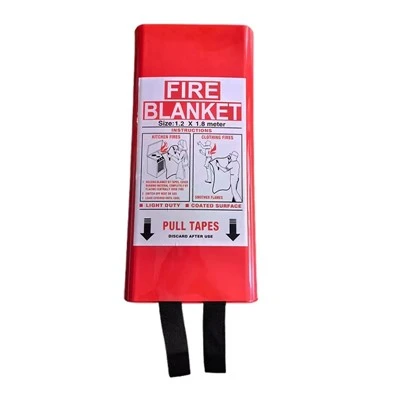
I’ve seen too many people grab a fire blanket and fumble with it in an emergency, panicking so bad they can’t even unfold it. That’s why practice is non-negotiable. Before an emergency ever happens, every person in a space that requires a fire blanket (think restaurants, construction sites, daycare centers, or factory floors) should do a dry run. Start by locating the fire blanket: most are stored in wall-mounted, easy-to-grab cases near exits or high-risk areas like stoves, welding stations, or chemical storage. When you reach for it, don’t yank it off the mount hard—grip the edge of the case, and pull firmly to tear the plastic or cardboard seal. Inside, you’ll find the blanket folded neatly, with a loop or tab at one end to help you pull it open.
Now, if someone is on fire, the first rule is: do not let them run. I can’t stress that enough. When clothes catch fire, the instinct is to panic and run, which feeds the flames more oxygen and makes the fire burn hotter and faster. If you see someone standing, waving their arms, or moving around while their clothes are on fire, yell at them clearly: “Stop, drop, and roll!” If they’re so disoriented they can’t follow instructions, act fast to get the fire blanket to them.
Let’s break down the step-by-step process, tailored specifically for using a fire blanket on a person:
Step 1: Approach safely, and yell a clear command. When you grab the blanket, pull it fully out of its case—don’t leave half of it inside, that won’t cover the person. As you move toward the person, make sure you’re not getting too close to the flames; stand a foot or two away, so you don’t get burned yourself. Yell loudly: “Stop! Don’t move!” This gives them a chance to pause, which is critical. If they keep running, you won’t be able to wrap the blanket around them properly.
Step 2: Unfold the blanket correctly. Once you’re in position, hold the blanket by the two top corners, the ones closest to you. Most fire blankets have a label or a visible guide that marks these corners—look for the soft, non-heavy edges, not the side that touches the fire. If there are handles or tabs on the corners, grip those tightly to keep the blanket stable. Don’t let go of the edges at any point, because if it’s folded or bunched up, it won’t cover the person fully.
Step 3: Cover the person completely. Now, slowly lower the blanket over the person, starting from the top of their shoulders and head, then moving down to their torso, waist, and legs. Make sure you wrap it around their entire body, not just drape it over the front. If their arms are raised, gently guide them down so you can cover their arms too—trapped arms with fabric on fire can cause burns that spread quickly. Once the blanket is fully around them, tie the corners together at the back of their neck and waist to hold it in place. This is key: the blanket needs to be secure so it doesn’t slip off, and so all oxygen is cut off.
Step 4: Keep them still, and wait. Once the blanket is wrapped around them, tell them to stay still—no rolling, no moving. The fire will go out on its own within 10 to 20 seconds, depending on how big the flames were. Don’t remove the blanket early, even if you think the fire is out; if a spark remains, it could re-ignite. This is where practice pays off: most people take 10 seconds or longer to unfold the blanket and cover someone, so the total time from grabbing the blanket to the fire going out is usually under a minute.
Step 5: Get emergency help immediately. Even if the fire is out, burns from clothes catching fire can be more severe than they look. The heat penetrates deep into skin, and there might be hidden burns from the fabric melting. As soon as the fire is out, call for emergency medical services right away. Don’t let the person remove the blanket themselves—wait for paramedics, who can safely take it off and assess their injuries.
I want to be clear about when a fire blanket is the right choice, and when it’s not. Fire blankets are only for small, contained fires on a person’s clothing—they’re not for large, widespread fires, or for fires that have spread to furniture, walls, or appliances. If someone is on fire and the flames are more than waist-high, or if there’s a risk of the fire spreading to other areas, use a fire extinguisher only if you’ve been trained to do so, and if the fire is small and the exit is clear. But for clothing fires, a fire blanket is always the first line of defense.
I’ve had customers tell me they once tried to use a fire extinguisher on someone’s clothes, and it left the person covered in white powder that burned their eyes and lungs. That’s why we design our fire blankets specifically for this use—they’re lightweight, easy to handle, and made from heat-resistant fiberglass that doesn’t stick to skin or fabric. We test every batch to make sure they can withstand temperatures up to 1000 degrees Fahrenheit, which is more than enough to smother clothing fires.
Another common mistake I see is people storing fire blankets in hard-to-reach places. We always recommend mounting fire blankets at waist height, near exits, and not blocked by equipment or supplies. For restaurants, that means one near each stovetop and one near the kitchen exit. For workshops, that means one near welding stations and one near the main shop floor. For homes, a fire blanket in the kitchen (the most common place for stovetop fires) and one near any wood-burning fireplace or space heater is ideal.
Regular training is also crucial. I work with businesses of all sizes to host free fire safety workshops, because even the most well-made fire blanket is useless if no one knows how to use it. Last year, we trained a group of line cooks at a small family restaurant, and one of the line cooks told me later that they’d had a small oil fire on their apron, and they remembered the steps we taught them. They grabbed the fire blanket, wrapped it around their body, and the fire went out before it could spread to their shirt. That’s the impact of proper training: it turns a tool into a lifesaver.
If you’re a business owner, a facilities manager, or a homeowner, now is the time to check your fire safety equipment. How old is your fire blanket? Most fire blankets have a shelf life of 5 to 10 years, depending on storage conditions—exposure to extreme heat or direct sunlight can degrade the material, making it less effective. If your blanket is past its expiration date, or if you don’t have enough for your space, it’s time to replace it. Using a fire blanket past its prime is like using a fire extinguisher that won’t discharge: it gives you a false sense of safety.
I often hear from customers who say, “We have fire extinguishers, do we really need fire blankets for people?” The answer is yes. Fire extinguishers work by spraying chemicals that can irritate respiratory tracts, eyes, and skin, especially on children or people with asthma. Fire blankets are gentle, non-toxic, and designed specifically to cut off oxygen to clothing fires without adding any chemicals. They’re also easier to use for anyone who hasn’t been trained on fire extinguishers—you don’t need to remember the “PASS” method (Pull, Aim, Squeeze, Sweep) or worry about aiming correctly, you just wrap and wait.
Let’s address a common myth: some people think rolling a person on the ground is enough to put out a clothing fire, and they don’t need a fire blanket. That’s partially true—rolling does smother the fire, but it can also spread embers to other parts of the body, or burn grass, carpet, or floors. If you’re indoors, rolling can even damage flooring or furniture. A fire blanket contains the fire completely, so there’s no risk of spreading embers, and it works faster than rolling, especially if the person is panicking and can’t follow instructions.
Another myth: fire blankets can only be used once. That’s not true, as long as the fire is small. If you use a fire blanket on a minor clothing fire, you can take it outside, shake it out, and inspect it. If there’s no permanent damage to the fabric, it’s safe to use again. If the fire was larger or caused holes in the blanket, it’s time to replace it, because holes mean oxygen can get through and the blanket won’t work next time.
As a fire blanket supplier, my priority is making sure these tools are accessible and effective for everyone. We work with small businesses and large corporations alike, providing high-quality, tested fire blankets that meet national safety standards. We also include free step-by-step instructions with every blanket, plus access to our online training videos so anyone can review the steps at home or at work.
Here’s the takeaway: a clothing fire is unpredictable and fast, but with the right knowledge and a properly stored fire blanket, you can prevent severe burns. The key is to stay calm, remember to stop, drop, and roll (for the person on fire), grab the blanket, unfold it fully, wrap it around the entire body, and call for emergency help immediately. Practice this at least once a year with your family or your team—you never know when you’ll need these steps.
If you’re looking to upgrade your fire safety equipment, or if you need a reliable supplier for fire blankets for your business or home, reach out to discuss your needs. We offer custom solutions for restaurants, workshops, schools, and residential properties, and we’re happy to answer any questions about installation, training, or product specifications. Don’t wait until an emergency happens—invest in your safety today.
LED Emergency Light References
National Fire Protection Association. (2022). Fire Safety in the Workplace. NFPA 101: Life Safety Code.
U.S. Fire Administration. (2021). Clothing Fires: Prevention and Response. USFA Publication.
International Organization for Standardization. (2019). Fire Blankets for Personal Use. ISO 11601:2019.
Shaoxing Weimin Fire Fighting Equipment Co., Ltd.
Shaoxing Weimin Fire Fighting Equipment Co., Ltd. is one of the most professional fire blanket manufacturers and suppliers in China, also supports customized service with low price. Welcome to buy discount fire blanket in stock here and get quotation from our factory. 5 years warranty is available.
Address: CHINA
E-mail: info@weiminfire.com
WebSite: https://www.weiminfire.com/
