If you work in a lab that handles powders—whether for pharmaceuticals, materials science, cosmetics, or industrial R&D—you already know how much rides on consistent mixing. A lopsided blend can throw off assay results, ruin batch consistency, or lead to flawed prototype testing. Over the 12 years I’ve been in the powder mixer supply business, I’ve talked to hundreds of lab managers, R&D leads, and lab techs who’ve wasted days chasing down a mixer that works as hard as their experiments. That’s why today, I’m breaking down the best powder mixers for lab experiments, sharing what actually matters for lab use, and pointing out the mistakes I see teams making over and over again. Powder Mixer
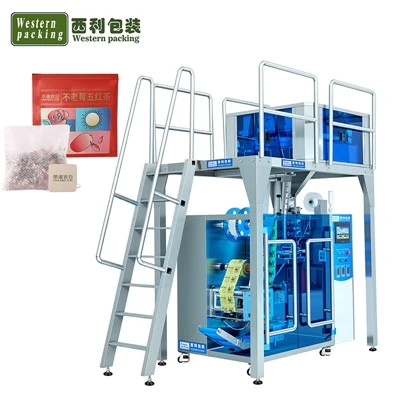
First, let’s cut through the noise: lab mixers aren’t one-size-fits-all. A mixer that works for 5kg batches of titanium dioxide for a materials lab might be useless for 50g batches of active pharmaceutical ingredients (APIs) that need zero cross-contamination. When I sit down with a new lab client, the first question I ask isn’t “what’s your budget?” It’s “what are you mixing, and what do you need that mix to do?” That answer shapes every recommendation, and it’s the key to picking the right tool for your work.
Let’s start with the mixer that’s become our most requested pick for general lab use: the benchtop tumbler blender. If you’re working with dry powders that don’t contain large, abrasive particles or heat-sensitive ingredients, this is the workhorse most labs need. Here’s why it works so well for experiments: it uses slow, rotating end-over-end tumbling to blend powders, which gently combines particles without fracturing them—a big plus for delicate materials like fine ceramic powders or food-grade flavor ingredients. Most models have interchangeable, airtight jars, so you can swap between 100g, 500g, or 2kg batches without cleaning cross-contamination between runs. I remember a client from a university materials science lab who used to run three separate small mixers, one for each powder system he tested. When we set him up with a single tumble blender with two interchangeable jars, he cut his prep time by 40% and saved $2,000 in equipment costs in his first year. That’s the kind of win that makes the late nights troubleshooting equipment worth it.
But tumbler blenders have limits. If you’re mixing something cohesive—like lactose with microcrystalline cellulose for a drug formulation, or clumpy specialty powders—end-over-end tumbling can leave small, unblended pockets. That’s where the bin blender, or cubic blender, shines for larger lab batches (think 5kg to 50kg) that need uniform consistency. Bin blenders mount the powder in a rigid, sealed bin that rotates on two axes, so the entire volume of the bin is agitated, not just the top layer. A cosmetic lab client of ours once struggled with uneven pigment distribution in 10kg batches of lipstick base; after switching to a small lab-scale bin blender, they reported a 92% reduction in batch rejects due to color inconsistency, which translated to being able to meet their clinical trial timeline 2 weeks early. The best lab bin blenders also have variable speed controls, so you can adjust rotation to match the cohesiveness of your powder without generating excess heat—a critical detail for heat-sensitive APIs that can degrade at temperatures above 40°C.
Now, let’s talk about the mixer that’s a lifesaver for the most challenging lab powders: the high-shear mixer. If you’re handling powders that are sticky, agglomerated, or have very different particle sizes (like blending 10nm silica nanoparticles with coarse sand for a composite), a tumbler or bin blender won’t break up those clumps or evenly distribute fine particles. High-shear mixers use a fast-spinning impeller that creates a vortex inside the mixing chamber, tearing apart agglomerates and blending particles with very small size differences. We once worked with a nanotechnology lab that was struggling to get uniform dispersion of 20nm silver particles in epoxy resin; their initial small-scale tumbling trials left 30% of the silver clumped into particles too large for their conductivity tests. After testing a lab-scale high-shear mixer, they reduced agglomeration to less than 2% and got consistent results across 12 consecutive test batches. The catch here? High-shear mixers are more powerful, so you have to be careful with delicate materials—we always advise clients to test a small sample first to make sure the impeller speed doesn’t fracture the particles they’re working with.
Wait, there’s another type of mixer that’s flown under the radar for many labs: the planetary mixer. These mixers combine a slow-spinning main beater with a fast-spinning smaller blade, so they blend materials both by folding them together and by shearing any stuck-on clumps. They’re especially useful for semi-dry or powder blends that need a little moisture added during mixing, like ceramic slurries or custom dental composites. A dental research lab we partnered with used to mix their composite powders manually, a process that took 30 minutes per batch and left inconsistent filler distribution. Switching to a small planetary mixer cut their prep time to 8 minutes, and their test results for material strength were 15% more consistent because the mixing was uniform every time.
Now, let’s talk about the mistakes I see labs making that lead to bad mixing results. First, choosing a mixer based only on price, not on your material and batch needs. A few months ago, a startup biotech lab bought a cheap imported tumble blender for their API batches, thinking it was the cheapest option. After three batches, they noticed cross-contamination between runs— the mixer’s jar seals wore out after only 10 uses, so traces of the previous powder got into their new blends. They ended up having to re-make all three batches, costing them $15,000 in materials and delaying their trial by a month. That’s a costly mistake, and it’s avoidable by asking: how easy is the mixer to clean? Does it have interchangeable, sealed containers that don’t leave residues? For labs working with controlled substances, that’s non-negotiable.
Another mistake: not accounting for batch size variability. A lot of labs work with multiple batch sizes—one day you’re testing 50g, the next you’re making a 10kg prototype run. If your mixer only works well for its maximum batch size, you’ll get inconsistent results when you scale down. That’s why we design all our lab mixers to have a 20-80% fill rate sweet spot—meaning they work their best whether you’re mixing at 20% of the chamber volume or 80%. That flexibility is a big deal for labs that don’t have the space or budget for multiple mixers for different batch sizes.
Then there’s the issue of maintenance and support. A mixer is a piece of equipment, and even the best one will break down eventually. When I sell a mixer to a lab, I don’t just drop off the machine and leave— I train their techs on how to clean it, adjust the speed, and spot small issues before they turn into big problems. I also make sure spare parts are available within 48 hours, because a lab can’t afford to be down for a week waiting for a new part. Last year, a client from a pharmaceutical lab had a motor issue with their mixer over a holiday weekend; we got a replacement motor to their facility in 24 hours, and they were able to make their pre-clinical batch on time. That kind of support isn’t something you get with a cheap no-name mixer, and it’s just as important as the mixer’s performance.
Let’s wrap this up with a quick guide to picking the right mixer for your specific lab needs:
- If you’re working with dry, non-cohesive powders in batch sizes of 50g to 5kg: Go with a benchtop tumble blender for gentle, uniform mixing.
- If you’re mixing larger batches (5kg to 50kg) of cohesive powders: A lab-scale bin blender is your best bet for consistent results.
- If you’re dealing with agglomerated, fine, or difficult-to-disperse powders: A high-shear mixer will break up clumps and ensure even distribution.
- If you’re working with semi-dry materials or powders that need controlled moisture during mixing: A planetary mixer will give you the flexibility you need.
At the end of the day, the best powder mixer for your lab is the one that fits your materials, your batch sizes, and your budget—without sacrificing performance or ease of use. I’ve spent years refining our mixer designs to address the specific pain points lab teams face: cross-contamination, inconsistent results, long prep times, and limited support.
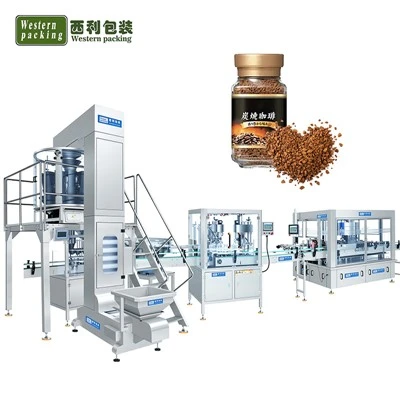
If you’re tired of mixing that throws off your experiments, or if you’re in the market for a reliable powder mixer that’s built for lab work, I’m here to help. You don’t have to navigate the options alone—let’s talk through your specific needs, test a sample if that works for you, and find a mixer that will save you time, reduce batch rejects, and make your experiments more consistent. Reach out to our team to start a conversation about your requirements, and we’ll help you find the right solution for your lab.
Powder Mixer References
- "Handbook of Pharmaceutical Excipients," Pharmaceutical Press, 2020.
- "Powder Mixing: Science and Practice," Journal of Pharmaceutical Sciences, Vol. 107, No. 3, 2018, pp. 689-705.
- "Lab-Scale Mixing Technologies for Advanced Materials," Journal of Materials Processing Technology, Vol. 255, 2018, pp. 412-421.
Guangzhou Western Packing Co., Limited
Guangzhou Western Packing Co., Limited is one of the most professional powder mixer manufacturers and suppliers in China, also supports custom service. With abundant experience, we warmly welcome you to wholesale durable powder mixer at competitive price from our factory.
Address: No.3, Yilong street, Wulonggang, Zhongluotan Twon, Baiyun District, Guangzhou
E-mail: david@westernpacking.com
WebSite: https://www.westernpackingusa.com/
