If you’re a production manager or operations lead who’s ever spent late nights troubleshooting bottlenecks on the factory floor, you know that a single uncoordinated piece of equipment can derail an entire line’s output. That’s why, when I first started walking clients through integrating a multiwire machine into their existing production lines—back when I was a field engineer for a multiwire machine supplier—I didn’t start with a sales pitch. I started with their pain points. I remember a client in the automotive wiring harness space telling me their old process involved hand-stripping and terminating 12 wires per assembly, a job that took 20 minutes per unit and had a 12% error rate. They’d tried standalone multiwire machines before, but they’d jammed the line so badly during integration that they’d gone back to manual labor. That’s the problem we solve, and today I want to break down exactly how to do it right, from pre-planning to post-launch support. Multiwire Machine

First, before you even uncrates the multiwire machine, you need to map out your existing line like you’re charting a route through a mountain. I always tell clients to build a detailed value stream map (VSM) of their current process, and not just the surface-level steps. For that automotive client, their VSM showed that wires came from a spool rack on the east side of the facility, were cut and stripped manually at Station 1, routed to a crimping press at Station 2, then visually inspected at Station 3, and finally packed at Station 4. The multiwire machine they’d tried before was only capable of cutting and stripping, so it created a handoff gap where operators had to move finished wire bundles from the machine to the crimping station—a 20-foot walk that added 30 seconds per unit, and increased error rates because bundles were dropped or mixed. When we did our pre-planning, we noticed that their crimping station had an empty slot adjacent to it, and their spool racks had extra space for a multiwire machine’s input conveyor. That’s the first key: don’t just look at the machine’s specs in a vacuum—look at how it fits into the physical and procedural flow of your line.
You also need to audit your power, air, and data infrastructure long before delivery. Multiwire machines are precision tools, and most industrial models require 3-phase power, consistent compressed air between 80-100 PSI, and a Ethernet connection to sync with your line’s PLC (programmable logic controller). I once worked with a medical device manufacturer that had a single-phase power supply on their main line, and they’d assumed they could use a converter to power the multiwire machine. The converter caused voltage spikes that fried the machine’s wire sensors, leading to $15,000 in damage and a two-week delay. To avoid that, our team always sends a pre-installation checklist to clients 30 days before delivery. The checklist includes steps like verifying phase type, air line diameter, and PLC protocol compatibility (most modern multiwire machines work with Siemens, Allen-Bradley, and Omron, but older lines might need a custom adapter). We also offer a free site assessment as part of our integration services, where one of our field engineers will come out, take measurements, test utilities, and even sit in on a shift to observe how operators work. That assessment usually takes half a day, and it catches 90% of the issues that cause integration delays.
Next, choose the right multiwire machine model for your line, not just the one with the highest speed. A common mistake we see clients make is buying the fastest multiwire machine on the market, only to realize it’s too fast for their next station, creating a backlog. For example, a client in the consumer electronics space needed to process 16AWG and 20AWG wires for headphone cables. They initially bought a machine that could process 20 wires per minute, but their crimping station could only handle 12 wires per minute, so the multiwire machine was sitting idle for 40% of its run time. When we replaced it with a model that matched the crimping station’s 12 wires per minute output, their overall line efficiency jumped 28%. It’s also important to consider the machine’s flexibility. If your line will need to switch between 8 different wire gauges for different products, a multiwire machine with quick-change tooling can cut setup time from 45 minutes to 5 minutes. We always ask clients to share their product mix for the next 2-3 years, not just their current product line, because a multiwire machine that’s flexible enough to adapt to new products will pay for itself in less than 18 months, versus a rigid model that becomes obsolete in two years.
Once you’ve got the machine and your site is prepped, the actual integration process works best when you take it one step at a time, instead of flipping a switch on launch day. We use a phased approach that starts with a trial run on a test bench at our facility, before the machine even leaves our warehouse. We wire the machine to a sample of the client’s PLC using their exact line program, and run it with their actual wires, testing for jams, cut accuracy, and sync between the machine and the next station. For the automotive client I mentioned earlier, this trial run caught that the machine’s output tray was too small to hold 12 completed wire bundles, so we added an extended tray and a small conveyor feed to the crimping station during the trial phase. That meant when the machine arrived at their facility, we only had to install it, connect utilities, and tweak the program slightly, instead of modifying it on their production floor.
After the trial run comes line-side installation and syncing. This is where operator training becomes critical. I’ve seen many integrations fail because the team using the machine wasn’t trained properly. We don’t just do a one-hour walkthrough when the machine is installed—we offer a two-day on-site training program that’s tailored to the client’s shift schedule. We teach operators how to clear jams, replace tooling, run test cycles, and basic troubleshooting. For example, our training includes a module on common multiwire machine issues, like misaligned wire feeds or sensor calibration errors, and how to fix them in less than two minutes, instead of calling for a service technician. We also provide quick-reference guides taped to every machine, and we offer ongoing remote support for the first 90 days post-installation, so operators can call our tech team at any time if they run into a problem. The automotive client’s line supervisor told us that the training was the reason their integration was successful: “We thought it would take a week to get the machine running smoothly, but we had it up to speed in three days, because we knew exactly what to do.”
Once the machine is synced to the line, you need to monitor and optimize the process for the first 30 days. Even with perfect pre-planning, there are always small tweaks that make a big difference. For example, a client in the appliance wiring space noticed that their multiwire machine was leaving minor burrs on the wire ends, which were causing issues at the next soldering station. Our team adjusted the machine’s blade angle and added a deburring step in the machine’s output conveyor, which fixed the issue in a day. We also track key performance indicators (KPIs) during this phase: overall equipment efficiency (OEE), line downtime, error rate, and labor cost per unit. For the consumer electronics client who’d bought the wrong machine initially, after we swapped it for the matched model, their OEE went from 58% to 86% in two weeks, and their labor cost per unit dropped by 32%. We use this data to make ongoing adjustments, like adjusting run speeds during peak shifts, or creating a schedule for regular tooling maintenance to prevent unplanned downtime.
One thing I always emphasize is that integration isn’t a one-time project—it’s an ongoing partnership. Too many companies treat multiwire machine suppliers like vendors, instead of partners, after the sale is done. We offer annual line audits, where our engineers come back and look for new bottlenecks as the client’s production needs grow. For example, after two years, the automotive client we’ve been working with expanded their product line to include more complex harnesses, so we upgraded their multiwire machine with a vision inspection module that checks wire length and crimp quality in-line, eliminating the need for a separate inspection station. That upgrade increased their line output by another 15% without requiring a full line overhaul.
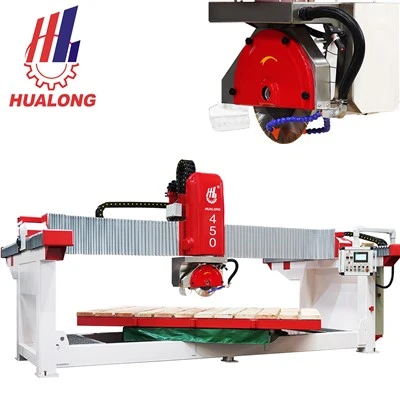
I know that adding new equipment can feel daunting, especially if you’ve had bad experiences with previous integrations. But the right approach—starting with understanding your line’s needs, doing thorough pre-planning, choosing a flexible machine, and partnering with a supplier that provides end-to-end support—turns a potential bottleneck into a productivity driver. If you’re looking to add a multiwire machine to your production line, take the time to map out your process, audit your infrastructure, and work with a supplier that’s invested in your long-term success, not just a single sale. We can help you assess your line, recommend the right machine for your needs, and support you from pre-planning through post-launch optimization to make sure your integration is smooth and delivers real results. Reach out to start a conversation about your production goals today.
Plc Bridge Saw References
Womack, J. P., & Jones, D. T. (2003). Lean Thinking: Banish Waste and Create Wealth in Your Corporation. Free Press.
Groover, M. P. (2020). Automation, Production Systems, and Computer-Integrated Manufacturing. Pearson.
International Society of Automation. (2019). Industrial Communication Protocols for PLC and HMI. ISA Press.
Fujian Province Hualong Machinery Co., Ltd.
Fujian Province Hualong Machinery Co., Ltd. is one of the most professional multiwire machine manufacturers and suppliers in China, featured by quality products and good price. Please rest assured to buy high-grade multiwire machine for sale here from our factory.
Address: Huangshi Industrial Zone, Putian City, Fujian Province, China
E-mail: hualongpro@hualongm.com
WebSite: https://www.stonecuttingmachine.com/
