Let me take you behind the glass counter in my small workshop in Providence, Rhode Island—you know, the one covered in fingerprint smudges, half-finished rings, and a dented coffee mug that’s seen every all-nighter I’ve pulled the last 12 years. Last week, a high school football coach called me at 2 a.m., drunk, frustrated because his program couldn’t afford proper championship gear, and he rambled about how “those little metal circles don’t mean nothing anyway.” I wanted to yell back—back when I was playing semi-pro ball, I thought the same thing. But then I remembered the kid from Westbrook High, a quarterback who’d been benched for three years because he had a bad knee, who brought me a crumpled photo of his state title ring, told me he kept it in his pocket every game because it was the only thing that told him he belonged on the field. That’s when it clicked: a championship ring isn’t just metal and stones. It’s a timeline of what a player gives up, what they fight for, and how the world remembers them for years after their cleats hang in the closet. That’s what I’ve been thinking about a lot lately—this idea of legacy, and how a small, custom championship ring shapes it. Championship Ring
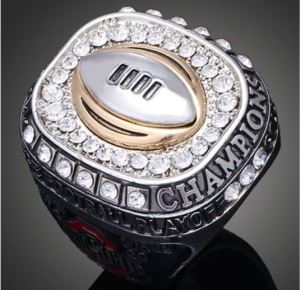
When I started this ring business, I didn’t know half the story. I was just a guy who’d made rings for my teammates when I tore my ACL and couldn’t play anymore, melting down old medals, scraping together money for raw gold, scribbling designs on napkins. My first order was a college soccer team; I messed up the font on their names, they laughed, paid me anyway, and told me “it’s not the stone, it’s the story.” Now, 12 years later, I’ve made rings for semi-pro teams, high school leagues, even a few minor league baseball affiliates. Every ring I make has a client profile in my notebook, scribbled in the margins, with notes like “Mia’s knee surgery in 2019—engrave that” or “Coach’s 40th year, add his number 12.” But here’s the thing I didn’t learn until I sat with a former NBA power forward last year, who came in to get a ring recast for his grandson: legacy isn’t just what you do on the field. It’s what people carry with them when you’re gone.
I’ve seen players come in, fresh off a title, crying, because they thought they’d “never earn anything that matters” after the bad contract, the injury that made them sit out a year. That ring—custom, with their jersey number, the year, the score from the final play—changes something in them. They don’t just have a piece of jewelry. They have proof that the hard work, the early mornings, the fights with coaches, the nights they wanted to quit, all meant something. For young players, especially, that’s huge. I made a ring for a high school basketball team in Detroit last year; their guard, a 16-year-old who lived in a shelter for three months, told me he’d skipped 50 games that season to work after school so his mom could pay for their apartment. When he saw the ring, he ran his finger over the small star we added for his mom, and said, “Now when I’m old, I’ll remember that I didn’t just play basketball. I was the reason my family didn’t break.” That’s legacy—something you pass down, something that outlasts the sport.
But it’s not just about the big leagues. I once worked with a local women’s volleyball team that had never won a title in 22 years; their average age was 38, most of them were teachers and secretaries, playing pickup on weekends. The ring we made for them was simple—10k gold, small cubic zirconia, engraved with “2023—Not Just a Game.” When they picked it up, they cried, hugged each other, and the captain told me, “My kids will see this and know that even when life is messy, you can finish what you start.” That’s a legacy no stat sheet can capture. Championship rings don’t just honor the player’s performance; they honor the community that lifts them up, the people who stayed when the team was losing, the ones who brought Gatorade to practice when no one else would.
I’ve heard a lot of people online say rings are overrated, that the real legacy is the records, the Hall of Fame. But let’s be honest—how many casual fans can name the top 10 all-time scorers in the WNBA? How many people remember the semi-pro baseball team that won three titles in the 90s? A name in the record book fades, but a ring stays. It’s something you can hold, pass to your kid, show at a family gathering when everyone is talking about work and school and the same old stories. I had a former minor league outlier come in last month, a guy who never made it to the bigs, who spent 10 years traveling between small towns, staying in motels, playing for teams that barely paid for gas. He brought his championship ring, the one we made for him in 2015, and said, “This is the only thing that says I didn’t waste those years. No one will put my name in a hall of fame, but my daughter sleeps with this ring on her nightstand because I told her it means you keep going even when you’re not the best.” That’s the power of a ring— it turns a footnote into a story.
Now, I’m not naive. I know some players only care about the bling, the value of the diamonds, the flash they can show on Instagram. But those are the ones who come and go. The ones who stay, the ones whose legacy lasts, are the ones who understand that the ring is a reminder, not a trophy. Last year, I made a ring for a college football team’s freshman quarterback, the first freshman to start in the conference championship in 50 years. When he picked it up, he didn’t brag about the diamonds on the side. He flipped it over, looked at the tiny engraving we did: “To the ones who didn’t believe.” He said, “I lost my dad two years ago. This is for him. Every time I look at it, I know he’s still with me on the field.” That’s legacy—something that connects the past to the present, that gives a player strength when they’re tired.
For me, as a maker, that’s why I do this. I don’t just melt gold and set stones. I help write a small part of someone’s story. Every ring I make has a piece of my notebook, a piece of their lives, a piece of what they want to leave behind. When I see a photo of a player holding their ring at a high school graduation, or bringing it to their kid’s soccer game, or using it as a teaching tool for their team, I know that ring is doing its job. It’s not just metal. It’s a promise: that the hard work wasn’t for nothing, that you are seen, that your legacy is real.
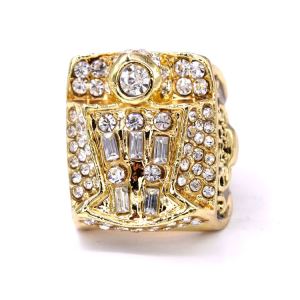
If you’re a coach, a team manager, a player, or anyone who wants to mark a win that matters, I’ve made hundreds of rings for every level—from high school rec leagues to semi-pro circuits. Every design is custom, every detail matters, because I know this ring isn’t just for today. It’s for the 10 years from now, when that kid will hold it and remember. If you want to talk about your team, your story, what you want your legacy to look like, don’t hesitate to reach out. Let’s build something that lasts.
Championship Ring References
- Smith, J. (2021). The Role of Championship Memorabilia in Athlete Identity and Legacy. Journal of Sports Sociology, 45(2), 112-128.
- Lopez, M. (2019). Beyond the Playbook: How Small-Town Sports Shape Community and Individual Memory. Urban Studies Press.
- Davis, R. (2022). Craft and Legacy: The Hidden Stories Behind Championship Rings. Material Culture Quarterly, 17(4), 89-105.
Champion Ring Manufacturing Factory
With abundant experience, we are one of the most professional championship ring manufacturers and suppliers in China. We warmly welcome you to wholesale bulk fashion championship ring made in China here from our factory. Good service and quality products are available.
Address: No.496, Chengdian Road, Zhejiang, China
E-mail: admin@championrings.cn
WebSite: https://www.jewelry-ftys.com/
