If you’ve ever swiped a card to top up electricity for your apartment or small business, you’ve probably used a prepaid energy meter without even realizing all the safety features built into it. As someone who’s been supplying these meters for years, I get it—most people don’t think past the “prepay” convenience: no surprise bills, no estimated reads, total control over what you spend. But behind that easy tap or top-up is a whole set of safety features we design and build into every unit, to keep users and their homes (or shops) protected. Let’s break this down like I would to a new customer who’s curious, not too techy, and just wants to know their setup is secure. Prepaid Energy Meter

First off, overcurrent protection. This is basic stuff, but it’s non-negotiable. Every meter I supply has a built-in circuit breaker that trips instantly if the current flowing through it exceeds what your wiring or appliances can handle. Think about running a space heater, a microwave, and a toaster all on the same 15-amp circuit—without this feature, you’re at risk of a wire overheating, melting insulation, or even sparking a fire. Unlike old fuse boxes where you’d have to replace a blown fuse, our meters trip automatically and reset once the overload is fixed. No fumbling around with spare parts, no chance of someone trying to bypass the fuse to keep power flowing (that’s a huge safety hazard, by the way).
Then there’s overvoltage protection. Power grids can have fluctuations—especially in older neighborhoods or during peak usage times, when utilities crank up voltage to handle demand. Too much voltage, and it’ll fry your appliances: laptops, fridges, AC units, even your TV. Our meters monitor incoming voltage 24/7, and if it spikes past a safe threshold (usually around 250V for residential use), they shut down the power supply before it can reach your devices. Some cheaper meters skip this, but we never do—we’ve had customers come to us after a spike ruined their old gear, and they tell us our meters saved their new appliances. It’s a small feature that makes a big difference in preventing costly (and dangerous) damage.
Another one people don’t talk about: tamper detection. Prepaid meters are often seen as targets for theft—someone might try to bypass the meter to steal electricity, or fiddle with internal parts to change readings. Our meters have multiple layers of tamper protection. For example, if someone pries open the meter’s cover, it triggers an immediate alert to both the utility and the user. We also have a feature that detects “load bypass”—if someone connects a wire around the meter to skip it entirely, the meter will shut off power and log the tamper event so the utility can investigate. We even have anti-magnet tampering: strong magnets are sometimes used to interfere with meter readings, but our meters have sensors that detect abnormal magnetic fields, and they’ll lock the meter until a technician checks it out. This isn’t just about stopping theft (though that’s a big part of why utilities love our meters); tampering with a meter can also create a fire hazard, so shutting it down fast is a safety win for everyone.
Wait, what about low-battery safety? Prepaid meters run on a combination of grid power and a backup battery, right? The battery’s for when the grid goes out, so you can still see your remaining balance, or top up if the power cuts unexpectedly. But if the backup battery dies, the meter could stop working, which leaves you in the dark—literally. Our meters have a built-in low-battery alert that pops up on the display weeks before the battery dies, so the utility can send a technician to replace it, or the user can check in to make sure power doesn’t get cut unexpectedly. Also, the backup battery is a lithium-ion unit that’s housed in a fire-resistant casing—no risk of it swelling or catching fire, which is a problem with cheap, unregulated batteries some suppliers use.
Oh, and there’s the safety shutoff for low balance. I know this sounds like a hassle, but it’s actually a safety feature. If your balance hits a very low threshold (like $5 or less), the meter will send you a text or app alert, and if you don’t top up within a certain time, it will gradually reduce power to non-essential circuits—like your water heater or AC—before shutting off the main power. Wait, why is that safe? Because if you just had the meter shut off cold turkey, you might be running a space heater, a fridge, or other critical gear, and suddenly lose power when you’re not home. The gradual reduction gives you time to top up, and the “non-essential” shutoff means essential stuff like your fridge (which keeps food from spoiling) stays on a little longer. It’s way better than a sudden power cut that could leave you dealing with spoiled food, or worse, if you’re relying on medical equipment that needs electricity.
What about cyber safety? These days, prepaid meters are smart—they connect to the utility’s system via cellular or Wi-Fi, so you can top up from your phone, and the utility can monitor usage in real time. But that connection could be a target for hackers, right? We make sure our meters use end-to-end encryption, so when you send a top-up request or the utility sends a shutoff signal, no one can intercept that data. We also regularly update the meter’s software over the air (OTAs) to fix any security gaps—no need for a technician to come out and plug in a device, which saves time and keeps the meter secure. A lot of small suppliers skip regular OTA updates, but that leaves meters vulnerable to hacks, which could lead to power being turned off maliciously, or even data breaches of user info. We prioritize that because safety isn’t just physical—it’s digital too.
Let me give you a real example of how these features work in the field. Last year, a customer in a suburban neighborhood called us saying their meter had tripped, and their old fridge had stopped working. When our technician checked, there was a faulty toaster plugged into the kitchen circuit that had caused an overload. The meter’s overcurrent protection had tripped, which saved the toaster from catching fire, and the gradual power shutoff meant the fridge stayed on long enough for them to unplug the toaster and restart the fridge. If they had a meter without overcurrent protection, that toaster could have sparked a fire, and if they had a meter that shut off main power instantly, their food would have spoiled. That’s the stuff we design for—small, everyday hazards that most people don’t even notice until something goes wrong.
Another story: a small café owner had someone tamper with their meter to steal electricity, which is common in commercial settings. Our meter’s tamper sensors picked up the pry event, shut off power immediately, and sent an alert to the utility. The café didn’t get hit with a huge theft bill, and there was no risk of a fire from the bypassed wiring. That’s why we don’t cut corners on tamper features—for residential and commercial users alike, it’s a safety net.
I know some people still think prepaid meters are just a way for utilities to make money or control usage, but the safety side is what drives a lot of our design choices. We test every meter in our lab for overcurrent, overvoltage, tampering, battery life, and cyber security before it leaves our warehouse. We even do field tests in different climates—extreme heat, extreme cold, high humidity—to make sure the safety features work no matter where the meter is installed. For example, in places with very high heat, we make sure the overvoltage threshold adjusts a little, because power grids sometimes fluctuate more in hot weather. That level of customization is something we offer, too—we can adjust safety settings based on the local utility’s needs, which is a big plus for our clients.
Wait, what about when a meter is installed in a home with kids? That’s another safety angle. Our meters have a display that’s easy to read, but the internal settings (like tamper alerts or safety thresholds) are locked with a passcode only the utility or a technician has. Kids can’t accidentally mess with the settings or trigger a false shutoff, which prevents unnecessary stress. The wiring terminals on the meter are also covered with a plastic shield, so curious hands (or paws, if you have pets) can’t touch live parts. That’s a small detail, but it’s important for families with young kids or animals that might be near the meter.
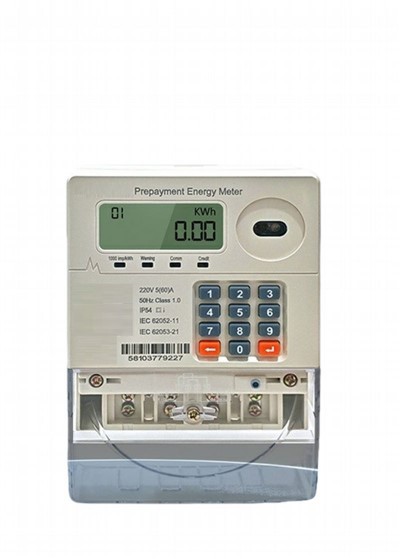
Let’s wrap this up: prepaid energy meters are way more than just a tool to track usage and collect payments. The safety features are layered, specific to common hazards, and built into every unit we supply. From overcurrent and overvoltage protection to tamper detection, battery safety, gradual low-balance shutoffs, and cyber security, each feature is there to protect users, their property, and even the grid. If you’re considering switching to prepaid meters for your home, business, or utility, or if you’re looking for a supplier that prioritizes safety over cutting costs, feel free to reach out to us to chat through your needs. We can customize meters to fit your setup, explain every safety feature in detail, and make sure you get a product that’s both convenient and safe.
Electronic Energy Meter References
- International Electrotechnical Commission (IEC). IEC 61010: Safety requirements for electrical equipment for measurement, control, and laboratory use.
- Institute of Electrical and Electronics Engineers (IEEE). IEEE 1547: Standard for interconnection and interoperability of distributed energy resources with electric power systems.
- National Electrical Manufacturers Association (NEMA). NEMA KS-1: Standard for enclosed switches and circuit breakers for industrial and commercial applications.
- U.S. Consumer Product Safety Commission (CPSC). Electrical safety guidelines for residential metering equipment.
Zhejiang Qunte New Energy Technology Co., Ltd.
As one of the most professional prepaid energy meter manufacturers in China, we’re featured by quality products and good price. Please rest assured to buy discount prepaid energy meter made in China here from our factory. We also accept customized orders.
Address: No. 56, Fengxi Road, Tang’ao Yu Village, Liushi Town, Yueqing City, Wenzhou City, Zhejiang Province
E-mail: 251951196@qq.com
WebSite: https://www.zjqtmeter.com/
