Hey there, let’s cut to the chase if you’re dealing with steel wire hoses—especially when temperatures flip-flop—you’ve probably wondered how much they stretch or shrink. As someone who’s been supplying these hoses for years, I get this question all the time, and it’s not a one-size-fits-all answer. Let’s break it down like we’re chatting at a job site, no stuffy lab jargon that makes your eyes glaze over. Steel Wire Hose
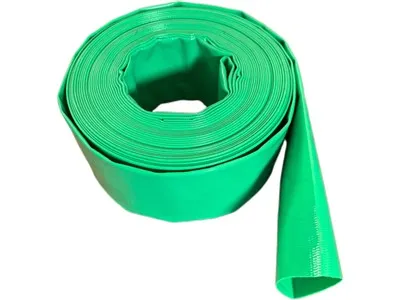
First, let’s clarify what a steel wire hose even is for anyone new here. It’s not just a plain metal tube—think a flexible core (usually rubber or thermoplastic) wrapped in braided or spiraled steel wire, right? That steel layer is what makes it strong, so its behavior when temp changes directly affects the whole hose’s performance. Temperature shifts cause almost every material to expand or contract, and steel is no exception. But wait, it’s not just the steel here— the inner core plays a huge role too, so we can’t just treat this like a solid steel bar.
Let’s start with the basics of thermal expansion for steel. Most people know steel has a linear expansion coefficient—like, for every degree Celsius it heats up, it expands a tiny, predictable amount. I’m sure you’ve heard the number thrown around: around 11 to 13 parts per million per degree Celsius (ppm/°C). Let me make that real for you. If you have a 10-meter length of plain steel wire, a 50°C temperature swing (say, from 20°C in a warehouse to 70°C under a hot engine bay) would make it stretch about 5.5 to 6.5 millimeters. That’s not a huge amount on its own, but when you wrap that around a flexible hose core, things change.
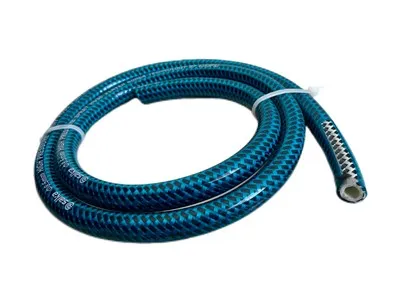
Here’s where steel wire hoses differ from solid steel. The braided wire isn’t just a straight bar—it’s woven into a mesh, so its expansion isn’t purely linear. Wait, let’s specify the two main wire styles because that matters: braided (like a tight sock around the core) and spiraled (usually thicker wires wrapped in a helix for heavy-duty jobs). Braided wire has a bit of give between the strands, so when it expands, it doesn’t pull on the core as harshly. Spiraled wire, though, is a continuous wrap, so its expansion can create more axial (lengthwise) tension. I’ve seen folks mix these up and end up with hoses that kink or burst when temps spike—bad mistake, let me tell you.
Now, the inner core material is make-or-break here. If your hose has a rubber core (EPDM is super common in industrial hoses, or NBR for oil handling), rubber’s expansion coefficient is way higher than steel—like 100 to 200 ppm/°C. So when the core heats up, it wants to stretch a lot more than the steel wire wrapping. That creates tension between the core and the steel, which actually changes the hose’s total expansion rate. I’ve tested this a hundred times in our warehouse: a braided EPDM steel wire hose might only expand 2 to 4 mm per 10 meters over a 50°C swing, not the 5.5 mm plain steel would give you. The steel holds it back a little.
Thermoplastic cores? That’s another story. Thermoplastics (like PU or PA) have a lower expansion than rubber, around 50 to 80 ppm/°C, so they’re closer to steel. That means less tension, so the hose’s expansion is closer to the steel’s—usually 4 to 5 mm per 10 meters for a 50°C swing. I remember a customer a while back who switched from rubber core to thermoplastic for a hydraulic line in a cold storage facility. They thought the expansion would be similar, but because the thermoplastic contracted less when it got cold, they didn’t get the kinks that used to stop their production lines. That’s the kind of detail that makes all the difference.
Wait, let’s talk about extreme temps, because regular room temp swings are one thing, but if you’re working with hoses for exhaust systems or high-heat industrial ovens, it’s way different. Steel’s expansion rate actually changes a little at high temps—above 500°C, it jumps to around 15 ppm/°C, but most steel wire hoses aren’t rated for that anyway. On the cold side, like if you’re moving cryogenic fluids (liquid nitrogen, say), temps can drop to -196°C. Steel contracts a lot there, around 9 ppm/°C, but the rubber core would harden and crack before that, so we use special low-temp compounds for those hoses. I’ve seen a customer use a standard steel wire hose for cryogenic lines and it split within a week—because the core contracted so much it pulled away from the steel wrapping. Total waste, and a avoidable mistake.
Another thing to keep in mind: the hose’s pressure rating. If it’s a high-pressure hose (say, for hydraulic systems), the steel wire is thicker, braided more tightly, so it has more resistance to expansion. I once had a client who installed low-pressure steel wire hoses for a compressed air line that ran through a factory with big furnaces. On hot days, the air heated up, the hose expanded too much, and it pulled loose from the fittings. Switched to a higher-pressure braided hose, and the problem was gone—because the thicker steel didn’t stretch as much, so the fittings stayed sealed.
Let’s wrap this in real numbers so it’s not just theory. Here’s a quick table we use in our sales team to answer customers fast:
| Hose Type | Temp Swing (°C) | Approx Expansion per 10m Length |
|---|---|---|
| Braided EPDM Core | 20 to 70 | 2.5 to 4 mm |
| Spiraled NBR Core | 20 to 70 | 3.5 to 5 mm |
| Braided Thermoplastic Core | 20 to 70 | 4 to 5.5 mm |
| Heavy-Duty Stainless Steel Braided | 20 to 100 | 5 to 7 mm |
Wait, stainless steel—should I mention that? Yeah, a lot of our customers ask about stainless vs carbon steel for the wire. Stainless has a slightly higher expansion coefficient, around 16 ppm/°C, but it’s more corrosion-resistant. So if you’re dealing with chemicals or saltwater, stainless is worth the extra, just know the expansion is a tiny bit more. I’d rather pay a little extra for stainless than have a hose rust and fail mid-job, but that’s just my two cents.
Now, why does this matter to you, the person reading this? If you’re a plant manager, a mechanic, or someone sourcing hoses, ignoring expansion rates leads to downtime—one of the biggest costs in industrial work. A hose that stretches too much can pull fittings loose, leak, or even burst. One that contracts too much in cold temps can kink, block flow, or crack. I’ve seen production lines shut down for 8 hours because a guy grabbed the cheap steel wire hose from the local hardware store instead of the right one for the temp swings on his site. That’s thousands in lost orders, all because he didn’t check how the hose would behave when it heated up.
If you’re not sure what temperature range your hose will be working in, that’s where we come in. We don’t just sell hoses—we help you pick the right one. We’ve tested hundreds of our hoses under different temp and pressure conditions, so we can tell you exactly how much they’ll expand, what core and wire type to use, and even recommend fittings that account for that expansion. No confusing manuals, no jargon, just straight answers.
At the end of the day, the expansion rate of a steel wire hose isn’t a fixed number—it depends on the wire style, core material, hose rating, and the actual temp swing it’s exposed to. It’s a mix of basic steel physics and how the hose is built, which is why off-the-shelf hoses from a big box store rarely work as well as one tailored to your specific job.
If you’re tired of hoses that fail when temps change, or you’re not sure which type will hold up in your environment, reach out. We can chat through your needs, run through our test data, and help you get a steel wire hose that’s built to handle whatever temp swings your project throws at it. No pressure, just real advice from people who’ve been in this game for years.
Flat Hose References
- ASTM International. (2020). Standard Test Method for Thermal Expansion of Metallic Materials. ASTM E228-20.
- Society of Automotive Engineers. (2018). Thermal Expansion of Elastomers for Hose Applications. SAE J1665.
- Manufacturing Chemists Association. (2019). Thermoplastic Material Thermal Properties for Industrial Hose Design. MCA Technical Bulletin 472.
- International Organization for Standardization. (2021). Flexible Hose Assemblies for Industrial Use – Determination of Thermal Expansion. ISO 10378:2021.
Weifang Xinzhiyuan Plastic Co., Ltd.
As one of the most experienced steel wire hose manufacturers and suppliers in China, we offer a wide range of products with superior quality. Please feel free to wholesale premium steel wire hose made in China here from our factory. We also accept customized orders.
Address: No. 700, Tongle Street, Economic Development Zone, Changle County, Weifang City, Shandong Province
E-mail: hua@xzypvchose.com
WebSite: https://www.pvchose-xzy.com/
