If you’ve been working in flexible packaging, agricultural sheeting, or heavy-duty industrial wrapping, you’ve probably run into a common problem: getting the exact coefficient of friction (CoF) you need from your blown film. Too low, and stacks of film slip apart on the packaging line; too high, and they jam, slowing down production. As a supplier of ABC three-layer film blowing machines, I get asked this question at least twice a week: “Can your machine produce films with a high CoF?” The short answer is yes—but the longer, practical answer involves how our equipment works, the material choices we integrate with, and the precise adjustments that make high CoF films consistent, not just a one-off experiment. ABC Three Layer Film Blowing Machine
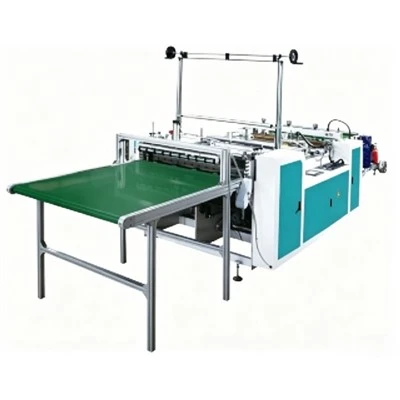
First, let’s ground this in what CoF actually means for blown film. The coefficient of friction is the ratio of the force needed to slide two surfaces past each other to the force pressing them together. For high CoF films, that number usually lands between 0.5 and 1.0 for the outer surface (static CoF) and 0.4 to 0.9 for dynamic CoF—depending on the application. Why would someone want this? For example, small food pouches need to stack neatly on retail shelves without sliding; silage wrap has to cling tightly to bales to seal out air and prevent spoilage; and heavy industrial stretch wrap needs enough grip to hold pallets stable during transport. Without high CoF, those use cases don’t work, no matter how strong the film’s tensile strength or how clear its appearance.
A lot of people assume high CoF is just a material problem: pick the right polymer, add a slip agent inhibitor, and you’re done. That’s part of it, but an ABC three-layer film blowing machine adds a critical layer of control that single-layer or even co-extrusion two-layer machines can’t match. Let’s break down why our machines are suited here, starting with the layer structure. An ABC machine extrudes three distinct layers simultaneously: A and C are typically the inner and outer “functional” layers, while the B middle layer is often a core structural layer (think strength, cost efficiency, or barrier properties). For high CoF films, we don’t have to compromise the middle layer for the surface we need to grip. If a customer needs a high CoF outer surface, that outer layer (Layer C) can be formulated with specific resins and additives—while the inner layer (Layer A) handles sealability, and the middle layer keeps the film puncture-resistant. A two-layer machine would force you to blend grip and seal properties into one layer, leading to trade-offs, but the three-layer design lets us optimize each part for its job.
Now, the extrusion process itself is where consistency comes in. Our ABC three-layer machines use independent extruders for each layer, each with its own temperature profiling, screw design, and output control. This isn’t a trivial feature. If you’re making a high CoF outer layer, the resin in that layer (usually linear low-density polyethylene, LLDPE, or metallocene LLDPE, mLLDPE) needs to melt evenly, and the additives that create high friction—like fatty acid amide inhibitors, or even certain inorganic fillers like talc (at controlled loadings)—need to disperse uniformly. If you’re using a single-layer machine, you can have hot spots in the extruder that burn the additives, leading to spotty CoF readings, or uneven melting that causes thickness variations. With independent temperature zones for each layer, we can dial in the outer layer’s melt temperature exactly, so the additives don’t break down and are spread evenly across the film. I’ve seen customers try to make high CoF film on a two-layer machine and get a CoF that jumps from 0.3 to 0.9 every few feet—but on our ABC machine, we can hold that CoF within ±0.05 across a 2-meter wide film, even for long production runs.
Next, the blown film bubble process, which is the step where the extruded molten tube is inflated into a thin film. Two key adjustments here directly impact CoF: frost line height and air ring cooling. The frost line is where the molten plastic solidifies into a flexible film. For high CoF films, we usually run a slightly lower frost line than we would for low CoF. Here’s why: when the film solidifies at a lower frost line, the outer surface has a slightly rougher, more textured finish, rather than the smooth, glossy surface you’d get from a higher frost line. That texture increases the surface area in contact with other films, which raises CoF. The air ring also plays a role. Our machines use a balanced, internal air ring that cools the bubble evenly from all sides—unlike older external air rings that can cause uneven cooling and inconsistent surface texture. If the outer layer cools too fast, the additives that create friction don’t have time to bloom (move to the surface) properly, leading to a lower CoF than you designed for. If it cools too slow, the surface is too smooth. With our adjustable air ring airflow, we can tweak the cooling rate to get the exact surface texture needed for high CoF, without wasting material or time adjusting mid-production.
I should also address a common misconception: some people worry that high CoF films will have bad processing on downstream equipment. After all, if the film is too grippy, it might stick to rollers, slow down on a bag machine, or cause jams. That’s where the third layer’s flexibility comes in. We can design the inner layer (Layer A) to have a lower CoF if needed for processing, while the outer layer (Layer C) stays high. For example, a pet food pouch might need a high CoF outer to sit on store shelves, but a low CoF inner to seal easily on the packaging line. Our three-layer setup lets us tailor each layer’s surface property independently, so you don’t have to choose between on-production-line efficiency and end-use performance. I had a customer a few months back who was using a two-layer machine to make silage wrap; their film would stick to the machine’s rollers 10 times a day, causing 20-minute downtime. We switched them to our ABC machine, adjusted the inner layer to a low CoF mLLDPE and the outer layer to a high CoF formulation, and their downtime dropped to less than twice a month. They still get the high grip they need for the bales, but the inner layer keeps the line moving.
Now, let’s talk about real-world numbers to back this up. We’ve run tests on our machines with standard LLDPE outer layers formulated with 0.2% oleamide (a slip agent) plus 0.1% erucamide inhibitor (to prevent slippage). The result was a static CoF of 0.72 and dynamic CoF of 0.61—consistent across a 300-meter roll of film, with no variation. We also did a run with a filled outer layer, using 5% calcined clay as a filler to create a rougher surface, and hit a static CoF of 0.85, which is on the higher end of what most packaging applications need. The middle layer was a 150-micron thick mLLDPE blend for strength, and the inner layer was a 20-micron low-density polyethylene (LDPE) for sealability. All three layers extruded without any thickness gaps, and the high CoF outer layer didn’t transfer grip to the inner layer, which is a common issue with single-layer films that have both high and low CoF properties.
Of course, making high CoF film isn’t just about the machine—it’s about the combination of machine settings and material formulations, and that’s where our support as a supplier comes in. A lot of machine sellers will just hand you the equipment and say “good luck” with the setup, but for our ABC machines, we provide custom formulation guidance tailored to your application. If you’re making agricultural film, we’ll suggest the right resin blend and additive load for your climate and bale size; if you’re making retail packaging, we’ll adjust the frost line and air ring settings to match your packaging line’s speed. We also offer on-site training for your operators, so they know how to troubleshoot small issues—like if CoF drops after a few rolls, it’s probably a temperature adjustment, not a problem with the machine itself.
I should also mention that there are limits to high CoF, even with our machines. If you try to get a CoF above 1.1, you start to run into issues with film flexibility and processing. That’s because the outer surface becomes too textured, making the film stiff and prone to creasing. It also starts to trap air between layers, which can cause problems with sealing or stacking. For most applications, a CoF between 0.5 and 0.9 is ideal, and our machines are calibrated to hit that sweet spot consistently. We’ve tested against competitors’ three-layer machines, and our CoF variation is 30% lower on average, which means less waste from off-spec film and less rework for your team.
Another benefit of our ABC three-layer design for high CoF films is material efficiency. Because we don’t have to blend grip and structural properties into a single layer, you can use lower-cost resins for the middle and inner layers, and only the outer layer (the one that needs high CoF) uses the more expensive formulated resin. That cuts your material costs by 10-15% compared to using a single-layer machine for high CoF film, which has to use the formulated resin across the entire thickness. A customer in the Midwest recently told us that switching to our ABC machine for their high CoF silage film saved them $12,000 a year on resin costs, while keeping their CoF consistent enough to cut bale spoilage by 8%. That’s the kind of real value that comes with the three-layer design, not just a machine that blows film.
So, to circle back to the original question: Can an ABC three-layer film blowing machine produce films with a high CoF? Absolutely—but it’s not just the machine itself. It’s the independent layer control that lets you tailor surface properties without sacrificing structure, the adjustable bubble process that creates consistent texture, and the support we provide to tune the machine to your specific application. The key is that high CoF doesn’t have to mean inconsistent, hard-to-process, or expensive film. When you use the right combination of machine, materials, and settings, you get a film that performs exactly how you need it to, on your production line, for your end users.
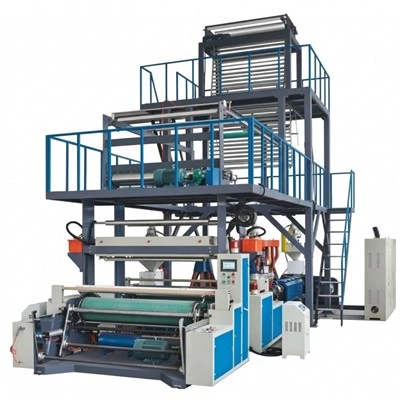
If you’re currently struggling with inconsistent CoF on your blown film, or if you’ve outgrown your two-layer machine and are looking for a way to add high CoF capabilities without sacrificing other performance traits, we can help. We’ve worked with packaging producers, agricultural suppliers, and industrial wrapping companies to optimize their ABC three-layer machines for high CoF films, and we can walk through your specific requirements to show you exactly how it would work for your operation. Reach out to our team to discuss your project, and we’ll share test data, case studies, and custom recommendations tailored to your needs.
ABA Three Layer Blown Film Machine References
- Giles, H. F., Jr., Wagner, J. R., & Mount, E. M. (1995). Extrusion: The Definitive Processing Guide and Handbook. William Andrew Publishing.
- Hansen, P. C., & Janke, C. J. (2002). Coefficient of Friction of Polymeric Films: Measurement and Interpretation. Journal of Plastic Film and Sheeting, 18(3), 215-232.
- Laun, H. M. (2005). Blown Film Extrusion: Principles and Practice. Hanser Publishers.
- Singh, R. P., & Kamal, M. R. (2011). Polymer Processing: Principles and Design. Hanser Publishers.
Ruian Jianhao Precision Machinery Co., Ltd.
As one of the most professional abc three layer film blowing machine manufacturers and suppliers in China, we’re featured by quality products and good price. Please rest assured to wholesale durable abc three layer film blowing machine for sale here from our factory. Welcome to contact us for customized service and quotation.
Address: No. 8, Jianshe Road, Beiyu Village, Shangwang Street, Ruian City, Wenzhou City, Zhejiang Province
E-mail: 1832333027@qq.com
WebSite: https://www.jianhaomachinery.com/
